Regular Car Maintenance 101 and How to Avoid Costly Repairs


.svg)


Why Regular Car Maintenance is Essential for Your Luxury Vehicle

Regular car maintenance is the systematic care and inspection of your vehicle at scheduled intervals to ensure optimal performance, safety, and longevity. Here's what you need to know:
Core Maintenance Tasks:
- Oil changes every 5,000-10,000 miles (depending on oil type)
- Tire rotation every 6,000-8,000 kilometers for even wear
- Brake inspections to catch pad wear before damage occurs
- Fluid checks (coolant, brake, transmission, power steering) monthly
- Air filter replacement every 12,000-15,000 miles
- Battery testing starting at 3 years of age
Key Benefits:
- Prevents expensive breakdowns and repairs
- Maintains fuel efficiency and performance
- Preserves resale value
- Ensures safety for you and your passengers
- Extends your vehicle's lifespan
Your vehicle is more than transportation—it's an investment that requires protection. As one industry expert puts it: "Our car can be our best friend if we treat it right. Safe, dependable and always up for an adventure."
For luxury vehicle owners, regular maintenance becomes even more critical. High-performance engines, specialized electronic systems, and precision-engineered components in brands like Porsche, BMW, and Mercedes-Benz demand meticulous care. Neglecting routine services doesn't just risk breakdowns—it can void warranties and significantly reduce your vehicle's value.
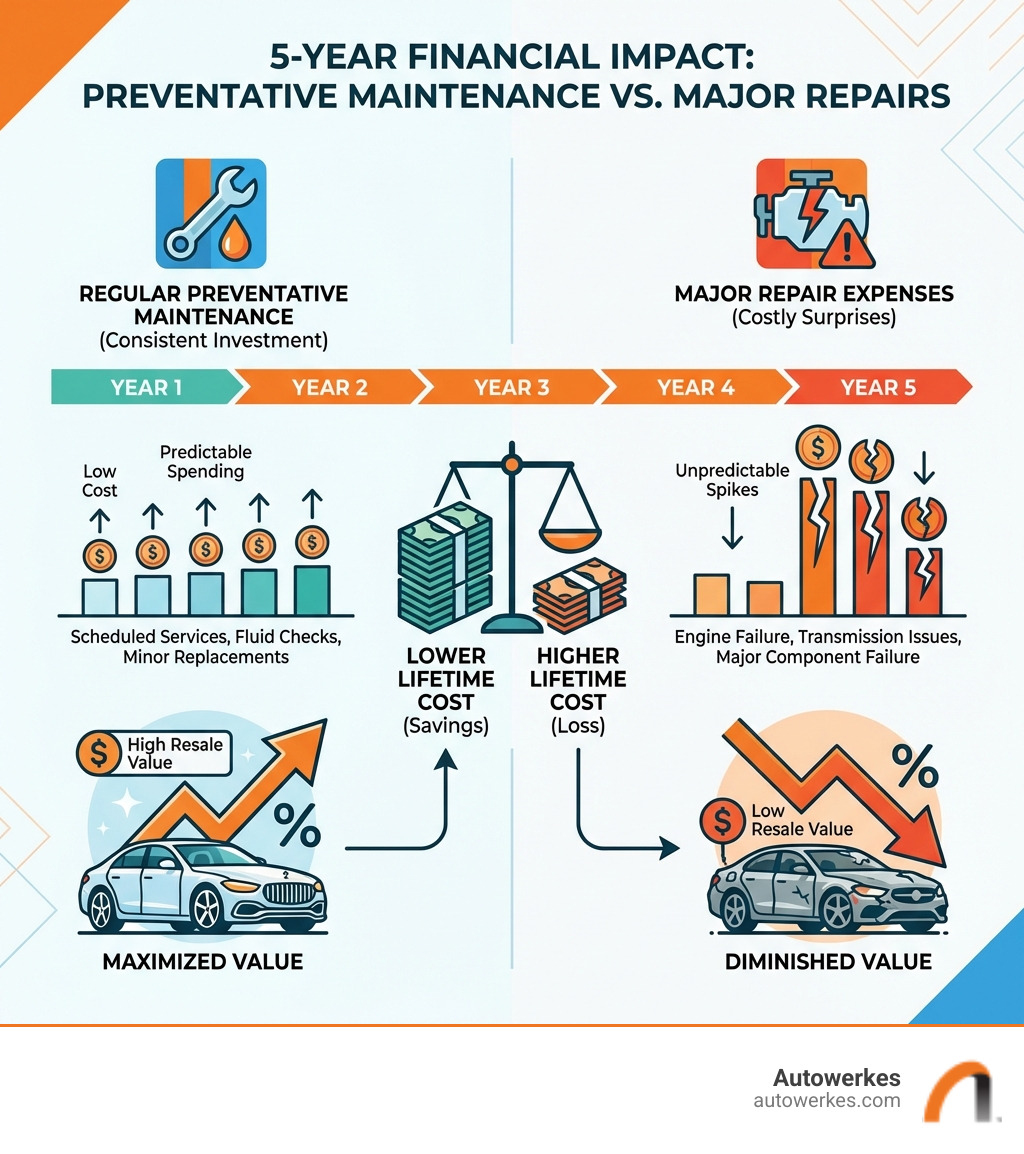
The good news? Most maintenance tasks follow predictable schedules. Small, consistent investments in care prevent the costly surprises that come from neglect. A properly maintained vehicle runs smoother, lasts longer, and saves you money over time through better fuel efficiency and fewer emergency repairs.
This guide breaks down everything you need to know about keeping your vehicle in peak condition—from daily checks you can do yourself to professional services that protect your investment.
The Ultimate Checklist for Regular Car Maintenance
Maintaining a luxury vehicle in areas like Huntington Beach and Newport Beach requires a proactive approach. Between the coastal salt air and the stop-and-go traffic of the Pacific Coast Highway, your car works harder than you might think. We recommend a tiered approach to regular car maintenance, starting with simple habits you can perform every time you get behind the wheel.

Daily and Weekly Visual Inspections
You don't need to be a master mechanic to spot trouble early. We suggest a quick daily walkaround. Look for:
- Fluid Leaks: Are there fresh puddles on your driveway? Clear fluid is usually AC condensation (normal), but colored or oily fluids (amber, red, or green) warrant an immediate checkup.
- Dashboard Warning Lights: Never ignore a "Check Engine" or "Service Soon" light. Modern European cars use complex sensors to warn you of minor issues before they become catastrophic failures.
- Exterior Condition: Check your headlights, turn signals, and brake lights. Having a friend stand behind the car while you tap the brakes is a simple way to stay safe and avoid unnecessary fix-it tickets.
Tire Health and Safety
Your tires are the only contact point between your Porsche or BMW and the road. Since well-maintained tires are integral to a safe, fuel-efficient ride, make it a habit to visually inspect your tires often. You should check your tire pressure every month, and especially before long trips to San Diego or up the coast.
To check your tread depth at home, you can use the Penny Test:
- Insert a penny into the tread groove with Lincoln's head upside down.
- If you can see the top of Lincoln's head, your tread is too thin (less than 2/32”), and it is time for new tires.
- For a more conservative "Toonie Check" (if you happen to have a Canadian coin from a trip!), slip it into the tread—if the tread hits the bear's paws, you're good. If the silver part is covered, you have plenty of life left.
Understanding Oil Intervals
One of the most debated topics in regular car maintenance is how often to change your oil. While the "3,000-mile rule" is largely outdated for modern synthetic oils, luxury vehicles still require strict adherence to manufacturer standards.
| Feature | Conventional Oil | Synthetic Oil (Luxury Standard) |
|---|---|---|
| Typical Interval | 3,000 – 5,000 Miles | 7,500 – 10,000 Miles |
| Performance in Heat | Breaks down faster | Remains stable |
| Engine Protection | Standard | Superior for high-performance |
| Recommended For | Older, high-mileage cars | Porsche, BMW, Mercedes, Mini |
Essential Monthly and Quarterly Tasks for Regular Car Maintenance
As we move into quarterly care (every 3 months or roughly every 3,000 to 5,000 miles), the focus shifts to the "veins and arteries" of your vehicle—the belts, hoses, and filters.
Oil and Filter Replacements
For most drivers in Irvine and Mission Viejo, an oil change every 6,000 to 8,000 kilometers (roughly 5,000 miles) or every six months is a safe bet. When we perform an oil change, we always replace the oil filter. This ensures that the fresh oil isn't immediately contaminated by the debris trapped in the old filter. For high-performance vehicles, we often use Advanced Diagnostic Procedures to ensure no underlying issues are affecting your engine's lubrication system.
Breathable Air: Engine and Cabin Filters
Your car needs to breathe just like you do. We recommend replacing engine air filters every 12,000 to 15,000 miles. A clogged filter reduces fuel efficiency and can cause your engine to "stutter" during acceleration. Don't forget the cabin air filter either; it keeps the dust, pollen, and smog of Southern California out of your interior. If you notice a "musty" smell when the AC is on, it’s time for a change.
Battery and Electrical Health
Heat is the number one enemy of car batteries, making our sunny California climate particularly tough on them. We suggest testing your battery once it is three years old. Generally, car batteries last between three to five years. Regular testing prevents the battery from dying unexpectedly and causing you to require Roadside Assistance.
During your quarterly check, we also inspect:
- Belts and Hoses: Look for cracks, fraying, or "glazing" (a shiny appearance).
- Power Steering Fluid: Ensure levels are topped off to prevent "whining" noises when turning.
- Battery Cables: Check for white, powdery corrosion around the terminals.
Long-Term and Seasonal Upkeep for Regular Car Maintenance
Long-term maintenance usually occurs annually or at specific mileage milestones (like the 30k, 60k, and 90k factory services). These tasks are vital for maintaining the "like-new" feel of a luxury vehicle.
Tire Rotation and Alignment
Rotating your tires every 6,000 to 8,000 kilometers helps to extend their service life by evenly balancing the tread wear. Since front tires often wear faster due to steering forces, moving them to the rear ensures you get the most value out of your set.
Brakes: The Most Critical Safety Feature
Brake inspections should be a yearly priority. We look for brake pad thickness—if the pads are less than 1/4 inch thick, they need replacement. For our clients, specialized Mercedes-Benz Brake Repair ensures that the complex ABS and electronic braking systems are calibrated correctly. Neglecting brakes doesn't just put you in danger; it can lead to damaged rotors, which are significantly more expensive to replace than simple pads.
Fluids, Spark Plugs, and Belts
- Spark Plugs: Most modern luxury cars need new spark plugs every 30,000 to 60,000 miles. Worn plugs cause engine misfires and poor gas mileage.
- Coolant Flush: Every two years or 30,000 miles, a coolant exchange prevents your engine from overheating during those hot inland Empire summer drives.
- Transmission Fluid: This is often overlooked but should be checked every 50,000 to 65,000 kilometers to ensure smooth shifting.
Seasonal Considerations
While we don't face harsh Canadian winters, many of our clients travel to the mountains for skiing. If you are heading to Big Bear or Mammoth, switching to a winter/snow tire is essential. When temperatures drop, standard performance tires harden, losing traction. Additionally, even in SoCal, rust protection is important for vehicles kept near the ocean, as salt spray can accelerate corrosion on the undercarriage.
Professional Service vs. DIY: Protecting Your Luxury Investment
There is a certain satisfaction in checking your own oil or replacing windshield wipers. However, when it comes to the intricate systems of a Porsche, BMW, Mercedes-Benz, or Mini, professional expertise is often the safer and more cost-effective choice in the long run.
Why Specialization Matters
Modern European vehicles are essentially rolling computers. A standard "all-makes" shop might not have the specific diagnostic software required to reset a Mercedes-Benz service light or calibrate a BMW’s steering angle sensor. At Autowerkes, we use factory-grade tools for Electrical Repair and complex diagnostics.
Knowing the quirks of your specific brand is also vital. For instance, there are 5 Common Issues to Watch Out for in BMWs, such as cooling system vulnerabilities, that our technicians are specifically trained to identify during routine inspections.
Warranty and Genuine Parts
If your vehicle is still under warranty, following the manufacturer's factory service schedule is mandatory. Using non-approved parts or skipping scheduled maintenance can give manufacturers grounds to deny warranty claims. We use genuine OEM (Original Equipment Manufacturer) parts to ensure that every repair meets the exact specifications of the factory.
Signs Your Vehicle Needs Immediate Attention
Sometimes, your car will tell you it needs help before a scheduled appointment arrives. If you experience any of the following, don't wait for your next regular car maintenance interval:
- Squeaking or Grinding Brakes: This is often the first sign you need Porsche Brake Repair. Squeaking usually means the wear indicator is touching the rotor, while grinding means the pads are completely gone.
- Soft Brake Pedal: If the pedal feels "mushy" or sinks to the floor, you may have air in the lines or a fluid leak. This requires immediate BMW Brake Repair to ensure stopping power.
- Vibrations: If the steering wheel shakes at high speeds, your tires might be out of balance. If the whole car shakes when braking, your rotors are likely warped.
- Unusual Odors: The smell of burning oil could indicate a leak onto the exhaust manifold, while a sweet, syrupy smell usually points to a coolant leak.
- Hard Shifting: If your automatic transmission "clunks" or hesitates when changing gears, your transmission fluid may be low or contaminated.
Maximizing Performance and Resale Value
We believe that a well-maintained car is a joy to drive and a smart asset to own. Keeping a detailed maintenance log—including every oil change, tire rotation, and Performance Repair—can add thousands of dollars to your car's resale value. Potential buyers are much more likely to pay a premium for a vehicle with a documented history of professional care.
Beyond the engine, don't forget the "comfort" maintenance. Regular Air Conditioning Repair and professional detailing protect the interior materials and ensure your driving experience remains premium, regardless of the temperature outside.
Trust the Experts at Autowerkes
For over three decades, we have served the Huntington Beach, Newport Beach, and Fountain Valley communities with a commitment to excellence. We understand that your luxury vehicle is a significant investment, and our goal is to help you enjoy it for as long as possible.
Whether you need a simple oil change or a comprehensive 60k-mile factory service, our team of certified technicians is here to provide the specialized care your Porsche, BMW, Mercedes-Benz, or Mini deserves.
Ready to give your vehicle the care it deserves? Schedule your professional maintenance appointment today at Autowerkes and experience the difference that specialized expertise makes.

