Never Miss a Beat: The Essential BMW Maintenance Mileage Interval Guide

.svg)


Why Understanding BMW Maintenance Mileage Intervals Protects Your Investment
BMW maintenance mileage interval schedules combine intelligent vehicle monitoring with proven service milestones to keep your Ultimate Driving Machine performing at its peak. Whether you drive a 3 Series sedan or an M4, understanding when your BMW needs service protects both your investment and your driving experience.
Quick Answer: BMW Maintenance Mileage Intervals
- 5,000 miles: Basic preventative inspection and checks
- 10,000 miles: Engine oil and filter replacement (most models)
- 20,000 miles: Microfilter replacement
- 30,000 miles: First brake fluid replacement, fuel filter inspection
- 40,000 miles: Engine air filter replacement
- 60,000 miles: Spark plugs, comprehensive service
- 90,000 miles: Major inspection including belts and hoses
Note: Your BMW's Condition Based Service (CBS) system may adjust these intervals based on your actual driving conditions.
Gone are the days of simple oil change stickers on your windshield. Modern BMWs use sophisticated sensors to monitor everything from engine speed to trip length, dynamically calculating when your vehicle truly needs service. This Condition Based Service (CBS) system represents a major shift from fixed maintenance schedules, yet certain mileage milestones remain critical for long-term reliability.
Many BMW owners feel uncertain about when service is actually due. Your iDrive display might show one interval, while your owner's manual lists another. Add in the differences between standard models, M performance variants, and electric vehicles, and confusion is understandable.
This guide cuts through that complexity. We'll explain how BMW's intelligent service system works, detail the essential mileage milestones for your specific model, and show you why following these intervals at a specialist like Autowerkes matters for your vehicle's performance, safety, and resale value.
The truth is, BMW engineered their maintenance intervals based on extensive real-world testing. Following them isn't just about checking boxes—it's about ensuring your vehicle delivers the precise, responsive driving experience you expect every time you turn the key.
Decoding the BMW Maintenance Mileage Interval
Your BMW is constantly talking to you—you just need to know how to listen. At Autowerkes, we've learned that maintaining your Ultimate Driving Machine isn't about blindly following a calendar. It's about understanding how your vehicle's sophisticated monitoring systems work together with proven mileage checkpoints to keep everything running at peak performance.
This section breaks down exactly how BMW service at Autowerkes combines intelligent vehicle monitoring with essential BMW maintenance mileage interval milestones to ensure your car delivers that precise, exhilarating driving experience for years to come.
How BMW's Condition Based Service (CBS) Redefines Maintenance
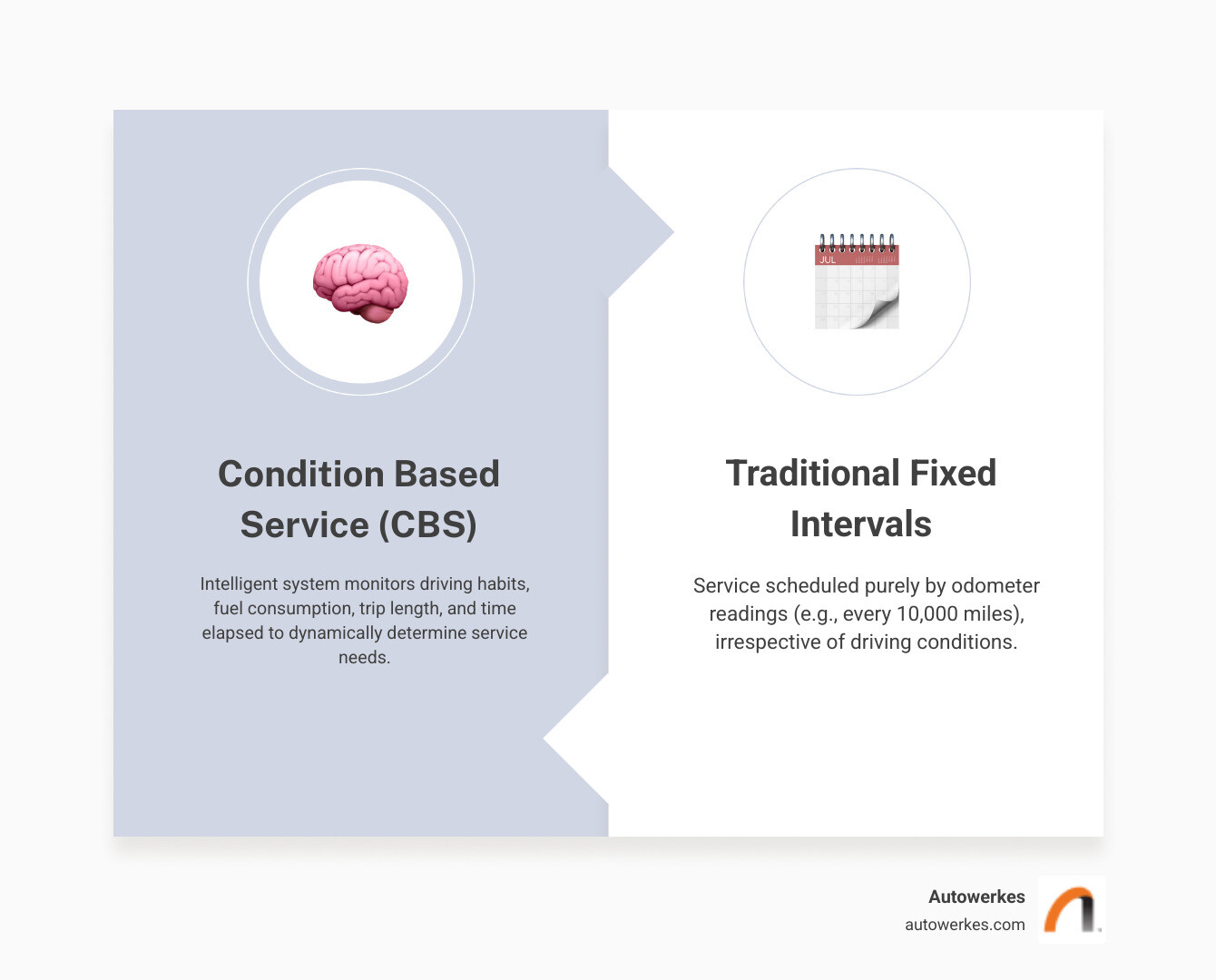
Remember when car maintenance meant changing your oil every 3,000 miles like clockwork? Those days are long gone, at least for BMW owners. Your vehicle uses something far more intelligent: Condition Based Service (CBS).
Think of CBS as your BMW's personal health tracker. Instead of relying on arbitrary mileage numbers, this sophisticated system uses a network of onboard sensors to monitor actual wear and tear. It's constantly analyzing your unique driving profile—how you accelerate, how long your trips are, even how much fuel you're burning.
Here's what makes CBS remarkable: if you're navigating stop-and-go traffic through Huntington Beach every day, your BMW knows that's harder on the engine than highway cruising to San Diego. Short trips around Newport Beach? The system recognizes that engines don't fully warm up, which affects oil life. CBS monitors factors like fuel consumption, engine speeds (both high and low), trip length, and time elapsed since the last service.
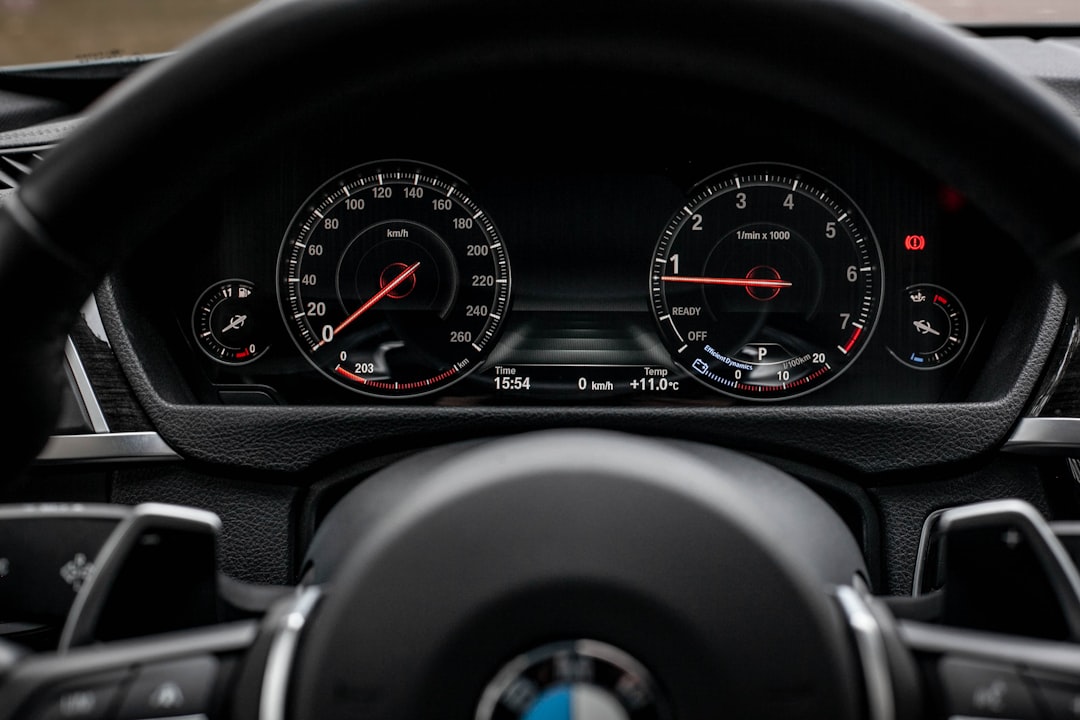
All this real-time data gets processed through complex algorithms that forecast when specific services—like an oil change or brake fluid replacement—are actually needed. The results appear right on your iDrive display, giving you clear alerts about upcoming maintenance. Your remote control key even stores vital maintenance service task status information that our technicians at Autowerkes can access to get the complete picture of your vehicle's service history.
For those who love diving into technical details, BMW publishes an official CBS technical document that explains exactly how the system works. The bottom line? CBS ensures maintenance is proactive and customized to your actual driving conditions, not some one-size-fits-all schedule.
Key BMW Maintenance Mileage Interval Milestones
While CBS provides dynamic alerts based on your driving, certain BMW maintenance mileage interval milestones remain crucial guideposts for long-term health. These are the checkpoints where specific components typically need inspection or replacement to prevent problems before they start.

The 5,000-Mile Check serves as your first line of defense. Even with CBS monitoring everything, we recommend a preventative inspection every 5,000 miles or six months at Autowerkes. This isn't a major overhaul—think of it as a wellness visit. Our technicians check engine oil level, inspect brakes, assess cabin air filter condition, verify coolant levels, examine tire wear, and test wiper blades. Catching small issues at this stage prevents them from becoming expensive repairs down the road.
The 10,000-Mile Oil Service is where things get serious. For most 2, 3, 4, 5, 7, 8 Series, and Z4 Roadster models, engine oil and filter replacement happens every 10,000 miles or 12 months. This is absolutely critical for engine longevity. Modern BMW engines demand high-performance synthetic oil, and this interval ensures proper lubrication, reduces friction, and keeps contaminants from damaging internal components. Interestingly, BMW revised its recommended oil change intervals for 2014+ models down to 10,000 miles from a previous 15,000-mile interval—a more conservative approach that reflects their commitment to engine health.
Around 15,000 to 20,000 Miles, your ventilation microfilter (cabin air filter) typically needs replacement. This ensures the air you're breathing inside your BMW stays clean, especially important when you're sitting in Los Angeles traffic. Fuel filters also get inspected and replaced if necessary during this window, keeping your engine supplied with clean fuel for optimal combustion.
The 30,000-Mile Service brings a significant milestone: brake fluid replacement. For most BMW models, this happens every 30,000 miles or 36 months for the first service, then every 24 months after that. Why? Brake fluid is hygroscopic—it absorbs moisture from the air over time, which degrades its performance and can compromise your safety. If you've noticed any sponginess in your brake pedal or discolored fluid, don't wait. This interval also includes a comprehensive vehicle inspection covering HVAC, exhaust, and suspension components. For manual-transmission BMWs, transmission fluid replacement typically happens around this time too. If you have any concerns about your braking system, we offer expert BMW Brake Repair at Autowerkes.
At 60,000 Miles, you've reached a major checkpoint. For most non-M models, spark plugs need replacement at this interval. Fresh spark plugs ensure efficient ignition and combustion, maintaining your engine's power and fuel economy. This service often includes a comprehensive inspection and potential replacement of brake pads and rotors, and for automatic-transmission BMWs, transmission fluid gets replaced. The engine air filter also typically needs replacement around this time for most non-M models.
The 90,000-Mile Inspection focuses on longevity. As your BMW approaches this milestone, we shift attention to wear-and-tear items that ensure long-term reliability. Belts and hoses get inspected and potentially replaced. These components are vital for engine function—their failure can lead to severe damage and leave you stranded. This thorough inspection ensures your BMW continues delivering that premium driving experience for many more miles.
Special Schedules: M, Electric, and Hybrid BMW Models
BMW's diverse lineup means maintenance isn't one-size-fits-all. High-performance M models and the increasingly popular electric and hybrid vehicles have unique requirements that we're intimately familiar with at Autowerkes.
M Models demand precision care because they're engineered for exhilarating performance. Every new M model requires a 1,200-mile running-in service—a critical, mandatory appointment that includes replacing the engine oil and filter, plus changing the rear differential oil. This early fluid change removes metallic particles from the initial break-in period of high-performance drivetrain components, protecting your investment from day one.
Beyond that initial service, M models need more frequent attention. Engine air filters get replaced every 30,000 miles instead of 40,000. Spark plugs, vital for those high-revving M engines, typically need replacement every 30,000 miles—half the interval of standard BMWs. Rear differential oil may also require replacement at 50,000 miles, and for Competition xDrive M3/M4 models, transfer case fluid replacement is also due at 50,000 miles. These specific intervals sustain the extreme demands placed on M powertrains.
Electric i-Series models represent a new era of maintenance. With no internal combustion engine, you can forget about traditional oil changes, spark plug replacements, and fuel filter inspections. Instead, maintenance focuses on the brake system (though regenerative braking reduces wear), tires (instant torque can accelerate wear), brake fluid replacement at standard intervals, coolant for the battery and power electronics, cabin filters, software updates, and high-voltage battery checks during services.
Hybrid PHEV models combine both worlds—they need attention for their gasoline engine (oil and filter changes, though CBS might extend these if you're running mostly on electric power) plus their electric systems. Brake fluid and cabin filters follow standard BMW intervals, high-voltage battery and electric systems get regularly inspected, and some models have specific transmission fluid change intervals, such as every 30,000 miles.
Regardless of your BMW's powertrain, our expertise at Autowerkes covers the full spectrum of its unique maintenance needs. Understanding these nuances is key to preventing issues, as we've highlighted in our guide to 5 Common Issues to Watch Out For in BMWs.
Protecting Your Investment with Proactive Care
Your BMW represents more than transportation—it's a carefully engineered machine designed to deliver driving pleasure every time you turn the key. Following your BMW's service schedule at Autowerkes isn't about checking boxes on a maintenance list. It's about preserving the performance, safety, and value that make your vehicle special, whether you're cruising the Pacific Coast Highway through Laguna Beach or navigating the daily routes around Los Angeles.
The Risks of Neglecting Your BMW's Service Schedule
We understand the temptation to skip a service appointment. Life gets busy, and it's easy to convince yourself that "just this once" won't matter. But here's the reality: postponing your BMW maintenance mileage interval services creates a cascade of problems that start small and grow expensive.
Think of it this way—your BMW's engine runs thousands of controlled explosions every minute. Old, degraded oil stops protecting those precision-machined parts. Decreased performance arrives gradually. You might not notice the subtle loss of horsepower at first, or the way your fuel economy creeps downward. But that responsive, powerful driving experience you fell in love with? It quietly slips away.
Reduced reliability follows close behind. An engine starving for clean oil develops excessive wear. Belts that should have been replaced at 90,000 miles snap at the worst possible moment, leaving you stranded on the 405. These aren't hypothetical scenarios—we see them regularly when vehicles arrive at our shop after years of deferred maintenance.
The safety implications worry us most. Worn brake pads and contaminated brake fluid compromise your BMW's sophisticated braking system. Your vehicle's advanced safety features depend on properly maintained components to function when you need them. A spongy brake pedal isn't just inconvenient—it's dangerous for you and everyone around you.
Then there's the financial reality. That inexpensive fuel filter you skipped replacing? It can damage your fuel pump and injectors, turning a $50 maintenance item into a $2,000 repair. Costly future repairs almost always exceed the cost of preventative maintenance. We've seen minor fluid leaks ignored until they destroy major components, changing routine service into extensive reconstruction.
For newer vehicles, there's another consideration. BMW's New Vehicle Limited Warranty expires at 50,000 miles or four years. While BMW Ultimate Care typically covers scheduled maintenance for the first three years or 36,000 miles, maintaining detailed service records becomes crucial for any warranty claims. More importantly, when you eventually sell or trade your BMW, prospective buyers will pay significantly more for a vehicle with documented maintenance history from a reputable specialist like Autowerkes.
Your BMW came with a comprehensive maintenance booklet that outlines exactly what your specific model needs and when. You can find your vehicle's maintenance booklet to reference the manufacturer's recommendations for your model year.
Why Expert Service is Non-Negotiable for Your BMW
Here's a truth that matters: where you service your BMW is just as important as following the maintenance schedule. Modern BMWs are sophisticated machines that demand specialized knowledge and equipment. At Autowerkes, we've built our reputation on understanding these vehicles inside and out.
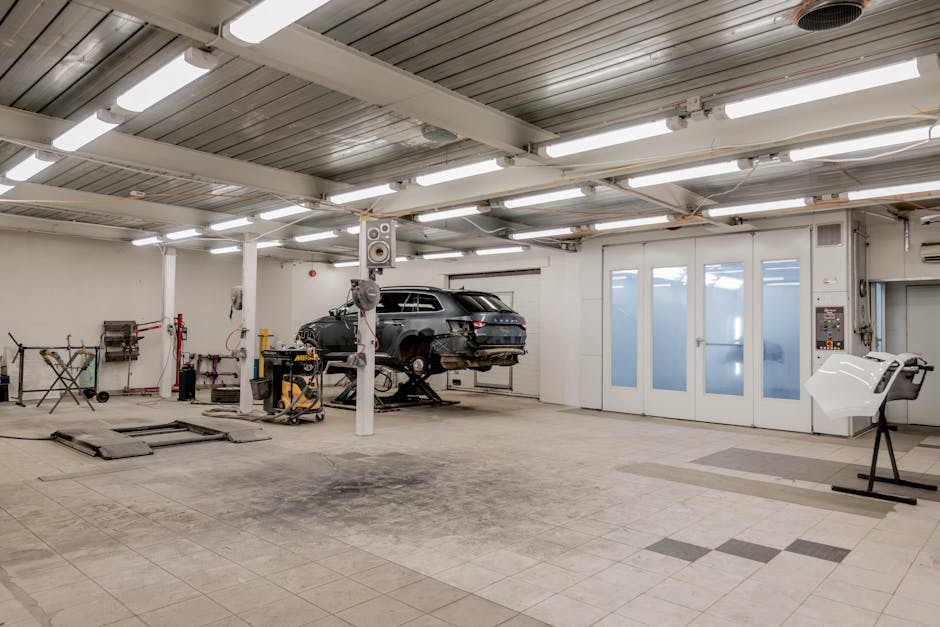
Consider the diagnostic process. Your BMW's electronics communicate through complex systems that generic code readers simply can't interpret properly. Our specialized diagnostic tools speak BMW's language fluently. We can read the nuanced data your CBS system provides, identify issues before they become failures, and perform the software updates that keep your vehicle running optimally. It's the difference between guessing and knowing.
After every service, your CBS system needs proper reset and calibration. This isn't just clearing a warning light—it's ensuring your BMW's intelligent monitoring continues tracking your actual driving conditions accurately. Our technicians know exactly how to work with this sophisticated system, maintaining the precise service intervals that BMW engineered for your specific driving patterns.
We exclusively use Genuine BMW (OEM) parts for every repair and replacement. Yes, aftermarket alternatives exist, and they're sometimes cheaper. But they're engineered to fit many vehicles adequately rather than your specific BMW perfectly. OEM parts meet BMW's exact specifications for fit, function, and longevity. They're what BMW designed your vehicle around, and they're what we trust.
Our trained technicians don't just work on various car brands—they specialize in BMW vehicles. They pursue ongoing training to stay current with the latest BMW technologies, from traditional engines to the newest electric and hybrid powertrains. This specialization matters when someone is diagnosing why your iDrive display is showing a particular warning, or why your M4's differential is making an unusual sound.
Over the years, Autowerkes has built deep expertise serving BMW owners throughout Huntington Beach, Newport Beach, Fountain Valley, Palos Verdes, Manhattan Beach, Los Angeles, Irvine, Mission Viejo, Laguna Beach, and San Diego. We understand how Southern California driving conditions—the stop-and-go traffic, the coastal salt air, the temperature variations—affect your BMW's maintenance needs. More importantly, we care about keeping your Ultimate Driving Machine performing exactly as BMW intended.
Your BMW deserves the meticulous attention it was engineered to receive. Schedule your expert BMW service with Autowerkes today, and experience the difference that specialized care makes.