Bleeding Your Porsche Brakes: The Ultimate Fluid Flush Guide

.svg)


The Unsung Hero of Your Porsche's Stopping Power
A Porsche brake fluid change is one of the most critical—yet often overlooked—maintenance tasks for your high-performance vehicle. When you press the brake pedal, you're relying on a hydraulic system that depends entirely on clean, moisture-free brake fluid.
Quick Answer: Porsche Brake Fluid Change Essentials
- When: Every 2 years or 20,000 miles (whichever comes first)
- Why: Brake fluid absorbs moisture, reducing its boiling point and causing brake fade.
- Cost: DIY materials cost $15-50; professional service varies.
- Time: 1-2 hours for experienced DIYers.
- Key Warning Signs: Spongy pedal, ABS light, dark fluid, longer stopping distances.
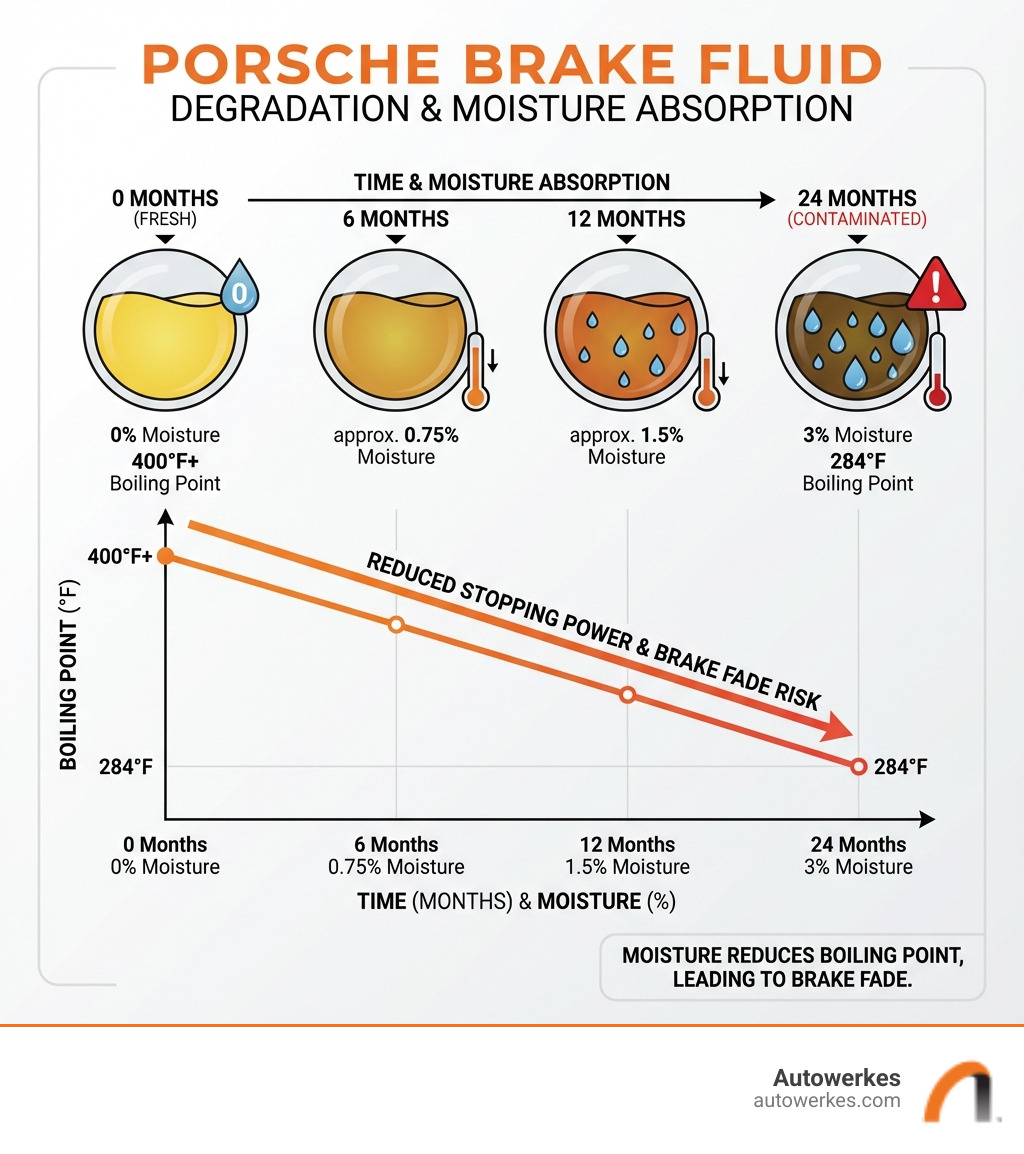
The problem is that brake fluid is hygroscopic—it absorbs moisture from the air over time. This moisture contamination lowers the fluid's boiling point from over 400°F to as low as 284°F, creating a serious risk of brake failure during spirited driving or track use.
Beyond preventing brake fade, fresh fluid also protects expensive components like your master cylinder, calipers, and the intricate ABS/PSM units from internal corrosion. Regular changes aren't a luxury—they're essential maintenance for the precise braking your Porsche was engineered to deliver.
This guide covers everything you need to know, whether you're doing it yourself or bringing it to the experts at Autowerkes.
Why a Porsche Brake Fluid Change is Non-Negotiable
Brake fluid is the lifeblood of your Porsche's braking system. A regular Porsche brake fluid change is non-negotiable because the fluid is hygroscopic, meaning it absorbs moisture from the atmosphere. This compromises safety and performance in two ways:
First, moisture lowers the fluid's boiling point. Heat from braking can boil the fluid, creating vapor bubbles. This causes "brake fade"—a spongy pedal and a dangerous loss of stopping power.
Second, moisture causes internal corrosion, damaging expensive parts like the master cylinder, calipers, and complex ABS/PSM units. Proactive changes are far cheaper than repairs. For more insights into maintaining your Porsche, explore our services at More info about Porsche Auto Repair.
The Official Interval & Telltale Warning Signs
Porsche specifies a brake fluid replacement every 2 years or 20,000 miles, whichever comes first. This is a core maintenance requirement, as fluid absorbs moisture over time regardless of mileage. If you track your Porsche or engage in frequent spirited driving, we recommend cutting this interval in half.
Look out for these warning signs that a service is due:
- Spongy or Mushy Pedal: The classic sign of air or moisture in the brake lines.
- Longer Stopping Distances: If the car doesn't stop with its usual crispness, the fluid may be compromised.
- ABS/PSM Warning Light: This can indicate a problem within the braking system, potentially related to fluid contamination.
- Dark or Murky Fluid: Fresh brake fluid is typically clear or pale yellow. If the fluid in your reservoir looks dark, it's overdue for a change. For a more scientific check, you can use a tester as described in this helpful guide on brake fluid testing.
Choosing the Right Fluid: From Street to Track
Selecting the correct fluid is paramount. For most street-driven Porsches, a quality DOT 4 brake fluid meets the manufacturer's specification.
For track use, a high-performance DOT 4 or DOT 5.1 fluid is a wise upgrade. Brands like ATE TYP 200 and Motul RBF 600 offer higher boiling points for an extra margin of safety. Note: While DOT 5.1 is compatible with DOT 4 systems, silicone-based DOT 5 is not and should never be mixed.
Even electric Porsches like the Taycan require a brake fluid change every two years. While they use regenerative braking, the hydraulic system is still present and the fluid remains hygroscopic.
Here's a quick comparison of typical boiling points:
| Fluid Type | Dry Boiling Point (°F) | Wet Boiling Point (°F) |
|---|---|---|
| Standard DOT 4 | 446-500 | 311-347 |
| High-Performance DOT 4 | 500-590 | 320-392 |
| Racing DOT 4 (e.g., RBF 600) | 593 | 410 |
Fresh fluid is a small investment in your safety and your Porsche's longevity. For expert care, visit our specialists at More info about Porsche Brake Repair.
Your Step-by-Step Guide to Flushing Porsche Brakes
A porsche brake fluid change can be a rewarding DIY project, with material costs around $15-50 and taking 1-2 hours for an experienced hand. However, this is a critical safety system. If you lack the tools or confidence, professional service is the safest choice, as an improperly bled system is extremely dangerous.
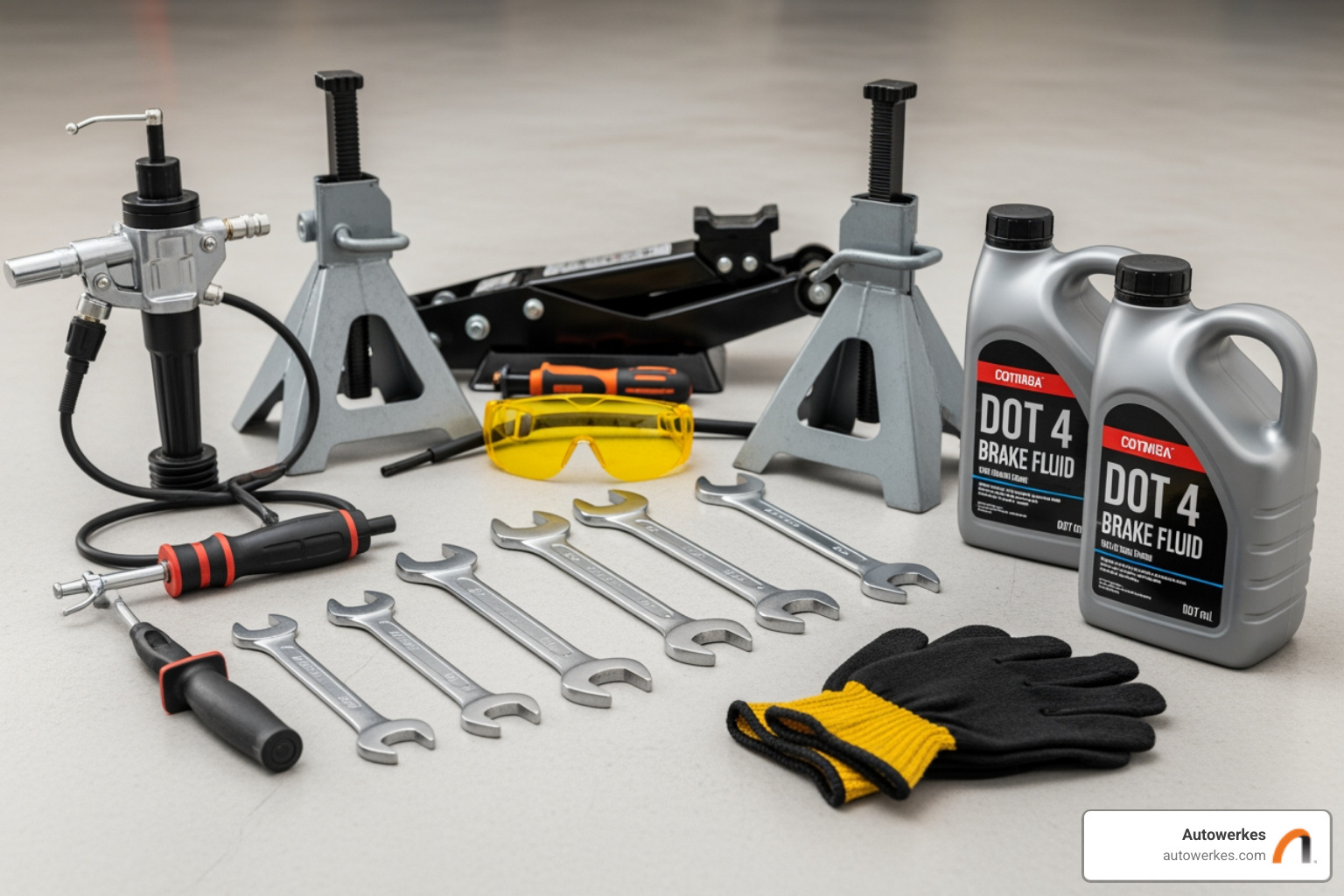
Gearing Up: Tools & Materials for a DIY porsche brake fluid change
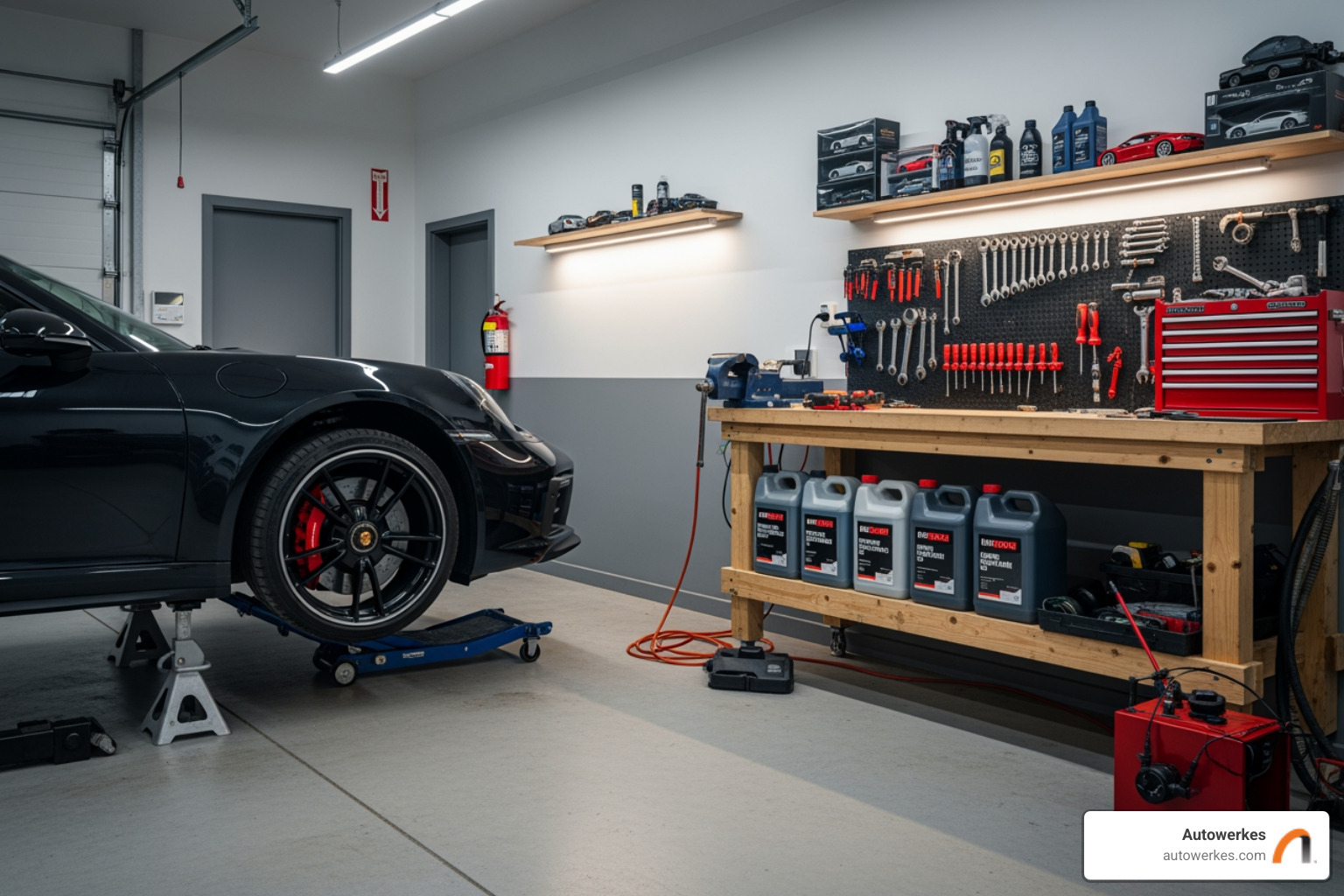
Gathering the right equipment is key to a smooth and safe job.
Tools You'll Need:
- Power Bleeder: Highly recommended for a one-person job (e.g., Motive Power Bleeder).
- Jack and Jack Stands: For safely lifting and supporting the vehicle.
- Wheel Chocks
- Torque Wrench
- 11mm Flare Wrench: Prevents rounding bleeder valves.
- Catch Bottle with Hose
- Turkey Baster or Fluid Evacuator
- 19mm Socket (for lug nuts)
- Small Screwdriver or Pliers: To remove the reservoir filter.
- Shop Rags: To protect paint from corrosive brake fluid.
- Safety Glasses and Gloves
Materials You'll Need:
- Fresh DOT 4 Brake Fluid: 1-2 liters in unopened containers.
- Used Brake Fluid Container: For proper disposal.
The Pressure-Bleeder Method: A DIY porsche brake fluid change
This method ensures consistent pressure for an effective flush.
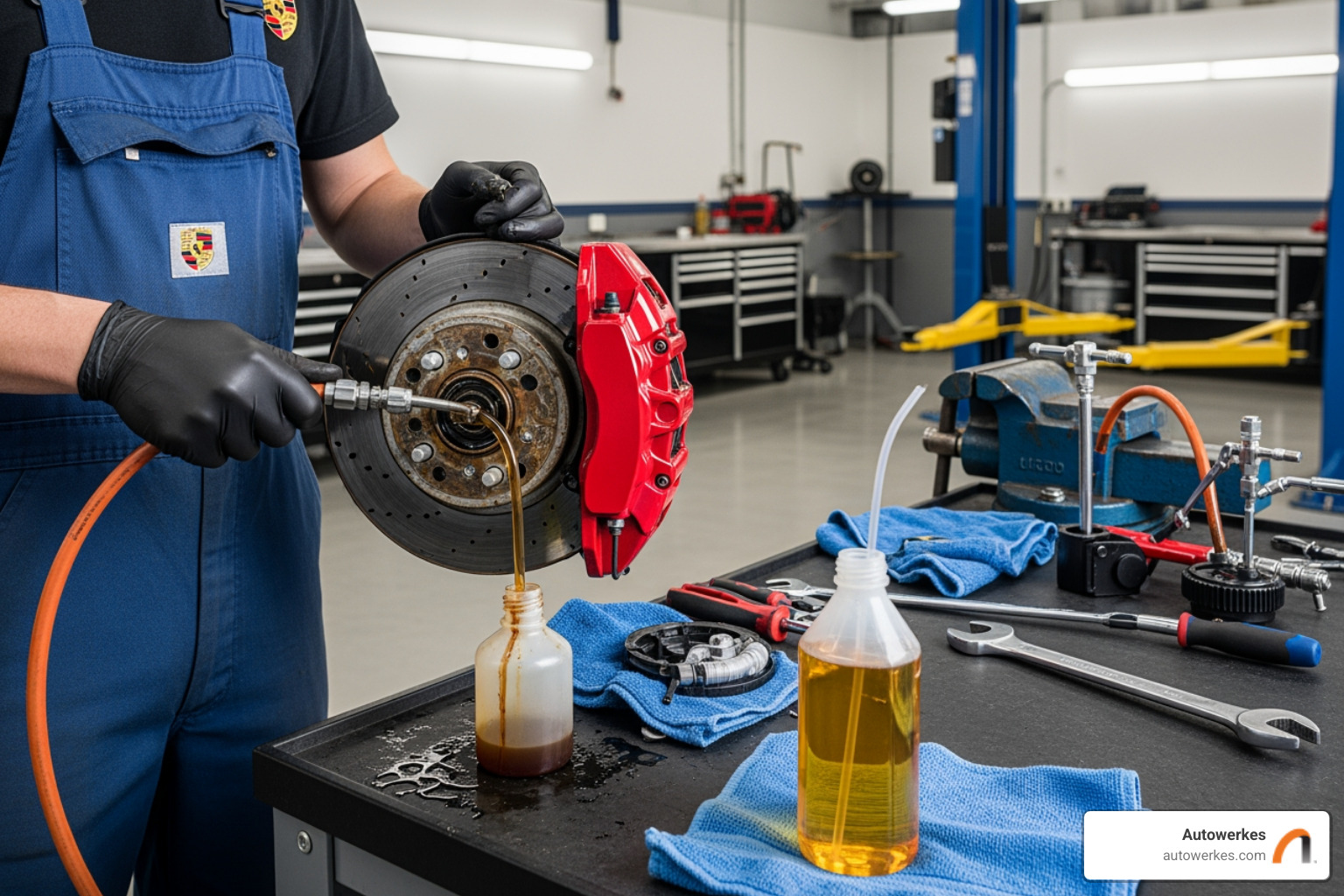
Preparation: On a level surface, open the frunk and locate the brake fluid reservoir. Place towels around it to protect the paint. Use a turkey baster to remove as much old fluid as possible, then refill with fresh fluid. Attach your power bleeder, add about 1 liter of fresh fluid to it, and pressurize the system to ~15 psi. Check for leaks.
Lift and Secure: Loosen the lug nuts, then use a jack to lift the car and secure it on jack stands at the approved points. If your car has air suspension, disable it first. Remove the wheels.
Bleeding the Calipers: The correct order is crucial: Right Rear -> Left Rear -> Right Front -> Left Front. This flushes the longest lines first. For each caliper:
- Many Porsche calipers have two bleeder valves; always start with the inner one.
- Attach the catch bottle hose to the bleeder nipple.
- Use your 11mm flare wrench to open the valve. Let the fluid flow until it runs clear and is free of air bubbles.
- Tighten the valve snugly (6-8 ft-lbs), remove the hose, and replace the dust cap.
- Constantly monitor the fluid level in the power bleeder. Do not let the reservoir run dry, or you will introduce air and have to start over.
Final Checks and Reassembly: Depressurize and remove the power bleeder. Top off the reservoir to the MAX line and replace the cap. Reinstall the wheels and torque the lug nuts to spec (e.g., 96 ft-lbs for most cars, 118 ft-lbs for older Cayennes, or 450 ft-lbs for center locks). Pump the brake pedal several times until it feels firm—do this before starting the engine. Take a cautious test drive to confirm proper brake function.
Dispose of Used Fluid Responsibly: Pour the old fluid into an empty, sealed container and take it to a local auto parts store or recycling center.
For a visual guide, check out this tutorial: D Wray’s Garage.
When to Trust the Experts for Your Brake Service
While DIY is possible, a professional Porsche brake fluid change is often the wisest choice. At Autowerkes, we have the specialized tools and expertise for a perfect job.
Consider bringing your Porsche to us if:
- You lack the right tools or confidence. This is a critical safety system; it's not the place to take risks.
- Your car has ABS/PSM issues. If air enters the ABS/PSM module, it requires a Porsche-specific diagnostic tool (like a PIWIS) to cycle the pump and purge the air. Our technicians are equipped and trained for this.
- You have persistent problems. A spongy pedal after a flush could mean a failing master cylinder or other issues that require expert diagnosis.
- You want peace of mind. Our certified technicians perform a comprehensive brake system inspection with every service, ensuring the safety and performance of your Porsche. We proudly serve clients throughout the greater Los Angeles and Orange County areas, including Huntington Beach, Newport Beach, Irvine, and Laguna Beach.
Ready to give your Porsche the expert care it deserves? Schedule your expert Porsche brake repair with us today.