Demystifying Electronic Fuel Injection Systems: How They Work


.svg)


Understanding Electronic Fuel Injection: The Technology That Powers Your Engine

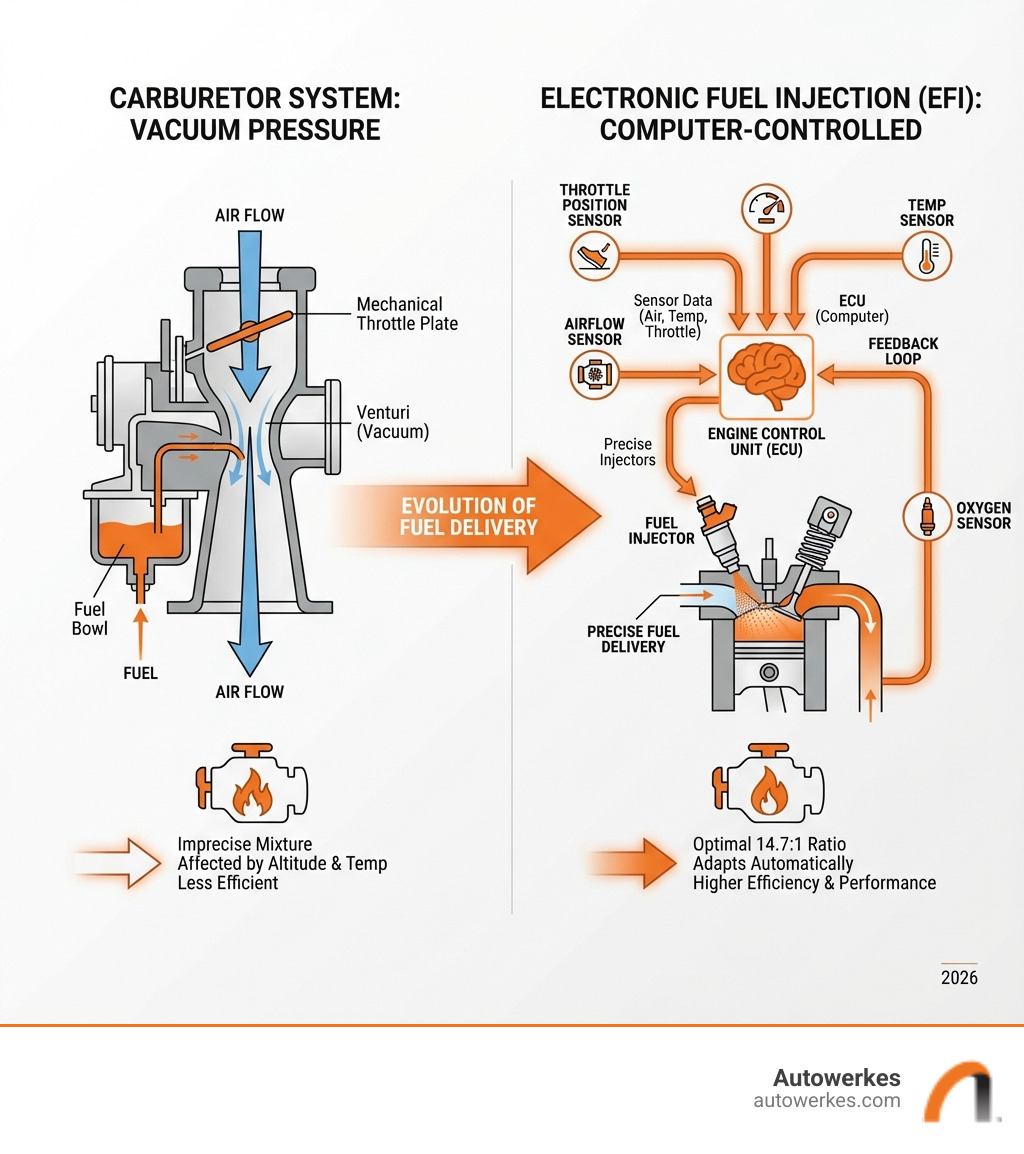
An electronic fuel injection system (EFI) is the computer-controlled technology that precisely delivers fuel to your engine, replacing the outdated carburetor systems of the past. Using a network of sensors, an Engine Control Unit (ECU) calculates the exact amount of fuel needed for optimal performance and efficiency.
Key Benefits of EFI:
- Improved Performance: More horsepower, torque, and responsive acceleration.
- Better Fuel Economy: A 15%+ improvement over carburetors means fewer trips to the pump.
- Lower Emissions: Cleaner combustion reduces harmful pollutants by over 25%.
- Improved Reliability: Enjoy instant starts in any weather and automatic adjustments for altitude.
The switch from mechanical carburetors to EFI was a step in automotive engineering. While carburetors were simple, they couldn't adapt to changing conditions, leading to inconsistent performance. By the 1990s, the demand for better efficiency and stricter emissions standards made EFI the universal standard.
Today, every modern vehicle, including your high-performance Porsche, BMW, or Mercedes-Benz, relies on an electronic fuel injection system for its smooth power and reliability. Understanding this system is key to maintaining your car's peak performance.
The Core of the Modern Engine: The Electronic Fuel Injection System
At Autowerkes, we know the heart of your luxury vehicle's performance is its sophisticated electronic fuel injection system. It’s the key to ensuring your engine runs efficiently, powerfully, and cleanly. Let's look at how this complex system delivers an exhilarating driving experience.
How an Electronic Fuel Injection System Works Step-by-Step
The magic of EFI is its "closed-loop" system, which constantly monitors and adjusts itself. Think of it as an orchestra conductor ensuring every part plays in perfect time.
Here’s a simplified look at the process:
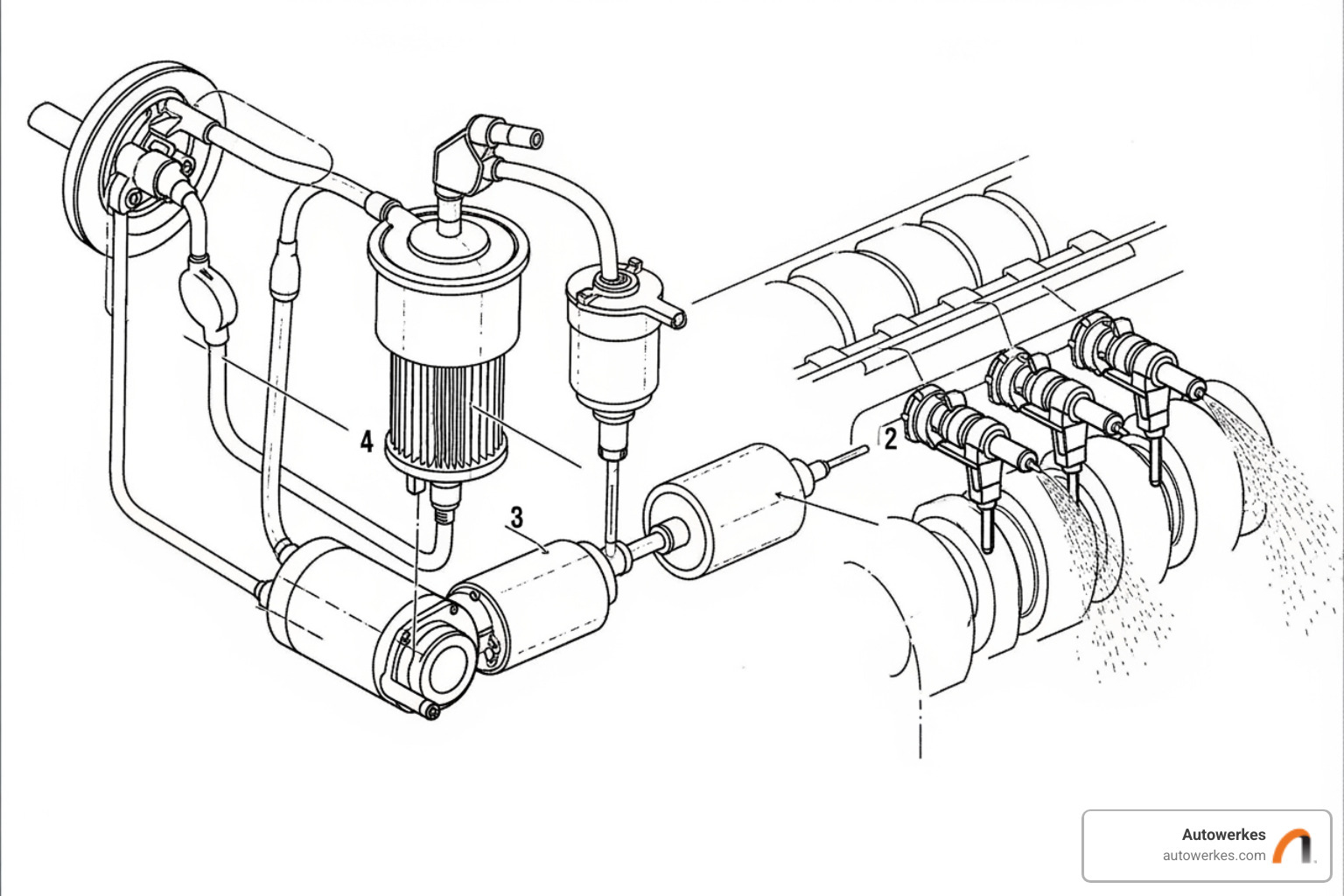
- Fuel Pressurization: An electric pump sends fuel from the tank under high pressure toward the engine.
- Sensor Data Collection: The Engine Control Unit (ECU)—the car's "brain"—gathers real-time data from sensors monitoring air flow (MAF), throttle position (TPS), engine speed (CKP), and oxygen levels (O2), among others.
- ECU Calculation: In milliseconds, the ECU processes this data to calculate the precise amount of fuel needed to achieve the ideal air-fuel ratio (typically 14.7:1 for gasoline).
- Fuel Injection: The ECU commands the fuel injectors to open for a specific duration, spraying a fine, atomized mist of fuel into the engine at the perfect moment for combustion.
This continuous cycle of sensing, calculating, and injecting allows the electronic fuel injection system to adapt instantly, ensuring your vehicle performs optimally whether you're on a cold start or cruising the freeways near Los Angeles. For a deeper dive, you can explore resources like How Fuel Injection Systems Work.
Anatomy of an Electronic Fuel Injection System
Understanding the core components helps explain how an electronic fuel injection system operates so efficiently.
- Fuel Pump: Pressurizes fuel from the tank and sends it through the fuel lines.
- Fuel Filter: Traps debris to protect the sensitive injectors from clogging.
- Fuel Rail: A manifold that distributes pressurized fuel to each injector.
- Fuel Injectors: Electromechanical valves that spray a fine mist of fuel when commanded by the ECU. The duration of the spray controls the fuel amount.
- Fuel Pressure Regulator: Maintains consistent pressure in the fuel rail.
- Sensors: The "eyes and ears" of the system (e.g., MAF, TPS, O2 sensors) that provide the ECU with critical data.
- Engine Control Unit (ECU): The computer "brain" that processes sensor data and controls the injectors to optimize engine performance.
These parts work in harmony to ensure your luxury vehicle performs flawlessly. If you experience issues with your vehicle's electrical systems, including those related to EFI, our experts at Autowerkes are here to help. Learn more about our Electrical Repair Services - AutoWorks.
Evolution of Precision: Types of EFI Systems
EFI technology has evolved significantly to meet demands for better performance and lower emissions.
- Single-Point Injection (SPI/TBI): An early form of EFI from the 1980s that used one or two injectors in a central throttle body, similar to a carburetor. It was an improvement but lacked the precision of later systems and is now obsolete.
- Multi-Point Injection (MPI/PFI): A major leap forward, MPI uses one injector per cylinder located in the intake manifold. This allows for more precise fuel delivery. A refinement called Sequential Fuel Injection (SFI) times each injection to coincide with the cylinder's intake stroke, further improving efficiency. This precision is a hallmark of systems in brands like Mercedes-Benz, which we specialize in servicing. AutoWorks - Mercedes-Benz Auto Repair.
- Gasoline Direct Injection (GDI): The most advanced EFI system used today. GDI injects fuel directly into the combustion chamber at extremely high pressure. This allows for superior fuel atomization and precise combustion control.
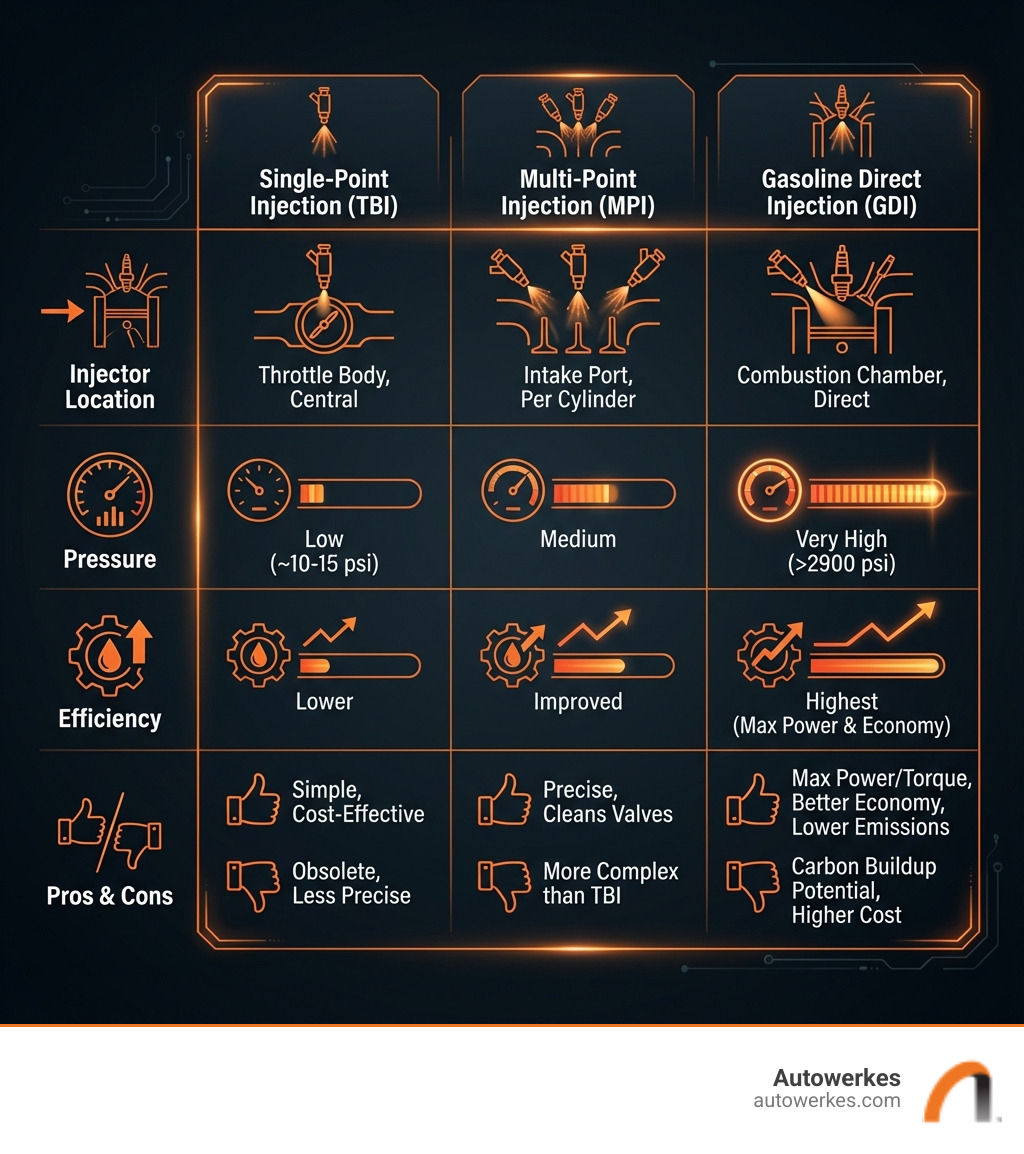
GDI offers significant advantages, including improved fuel economy (up to 15%), higher horsepower, and lower emissions. However, it can be prone to carbon buildup on intake valves since fuel no longer cleans them. This requires specific maintenance, a service our technicians are experts in performing.
Why EFI is Superior: Key Advantages
The universal adoption of electronic fuel injection systems is due to their clear advantages over carburetors, which translate to a better driving experience.
- Improved Fuel Efficiency: Precise fuel metering saves you money at the pump, a welcome benefit for drivers from Newport Beach to Irvine.
- Increased Power and Torque: Optimal air-fuel mixtures allow engines to produce more power, delivering the quick acceleration our Porsche and BMW clients expect.
- Sharper Throttle Response: Instantaneous adjustments provide a direct and responsive feel when you press the accelerator.
- Reliable Starts & Adaptability: EFI eliminates cold-start problems and automatically compensates for changes in altitude and temperature.
- Lower Emissions: More complete combustion drastically reduces harmful exhaust emissions, contributing to cleaner air.
- Smoother Engine Operation: Consistent fuel delivery results in a quieter, smoother-running engine and a more refined driving experience.
Maintaining Your EFI System for Peak Performance
While electronic fuel injection systems are reliable, they require regular attention to deliver peak performance. Neglecting maintenance can diminish your driving experience and lead to costly repairs.
Common Symptoms of a Failing EFI System
Your vehicle will often give you warning signs when the EFI system needs attention. Look out for these common symptoms:
- Check Engine Light: This is often the first indicator. The ECU has detected a fault in the system and requires a diagnostic check.
- Rough Idle: An uneven or shaky idle can point to dirty or faulty injectors disrupting the fuel balance.
- Poor Acceleration or Hesitation: A lack of power or a delay when you press the gas pedal suggests a fuel delivery problem.
- Increased Fuel Consumption: If you're filling up more often, a faulty sensor or clogged injector could be wasting fuel.
- Engine Misfires: A shudder or loss of power, sometimes with a popping sound, can indicate an injector is failing to deliver fuel correctly.
- Hard Starting: Difficulty starting the engine, especially when cold, can be a symptom of a failing EFI component.
- Fuel Smell: A raw fuel smell around the engine could mean a leak in a fuel line or injector, which is a serious safety hazard that needs immediate attention.
If you notice any of these issues in your Porsche, BMW, or Mercedes-Benz, it's crucial to have it inspected by an expert to prevent further damage.
The Importance of Regular EFI Service
Proactive maintenance of your electronic fuel injection system is key to preserving your vehicle's performance and reliability. Regular service is always more cost-effective than waiting for a failure.
Here's why it's important:
- Prevents Carbon Buildup: Regular cleaning, especially for GDI engines, prevents power-robbing carbon deposits on injectors and intake valves.
- Ensures Optimal Performance: Clean injectors and a healthy fuel system restore power, efficiency, and smooth operation.
- Extends Engine Life: Proper fuel delivery reduces stress on engine components, contributing to overall longevity.
- Maintains Fuel Economy: A well-maintained EFI system operates at peak efficiency, maximizing your miles per gallon.
Experts recommend an EFI system service every 25,000 miles to prevent issues like poor acceleration and increased fuel consumption. At Autowerkes, our certified technicians use specialized equipment to diagnose and service the advanced EFI systems in Porsche, BMW, Mercedes-Benz, and Mini vehicles.
Don't wait for symptoms to appear. Book your service appointment today to keep your EFI system in perfect working order. You can also explore all our offerings at Auto Repair Services - AutoWorks.
Conclusion: Driving Forward with EFI
The electronic fuel injection system is a cornerstone of modern automotive performance, efficiency, and reliability. Its evolution from early concepts to today's advanced direct injection systems has completely transformed the driving experience.
While these systems are incredibly reliable, their complexity means they require specialized expertise for proper maintenance and repair. GDI systems, for example, need specific service to address potential carbon buildup, ensuring they continue to deliver peak power and efficiency.
At Autowerkes, we accept the precision of these advanced systems. Our expert technicians are deeply familiar with the intricacies of the EFI systems in your Porsche, BMW, Mercedes-Benz, and Mini. We have the diagnostic tools and training to maintain your vehicle's cutting-edge performance.
Understanding your EFI system helps you make informed decisions about its care. Regular maintenance is key to open uping your luxury vehicle's full potential.
Ready to give your vehicle the expert care it deserves? Visit Autowerkes' Website to book your appointment at one of our convenient locations, from Huntington Beach to Mission Viejo.