Decoding the 'Lifetime' Fluid: Your BMW X3 Transmission Oil Change Handbook


.svg)


Why Your X3's 'Lifetime' Fluid Isn't Forever
If you're looking for quick answers about your bmw x3 transmission fluid change, here's what you need to know:
- When to Change: While BMW says "lifetime," experts recommend a fluid change every 60,000 to 90,000 miles. For heavy city driving or towing, aim for the 60,000-mile mark.
- Fluid Type: Your X3 requires a specialized synthetic transmission fluid. The exact type depends on your model year and transmission. Always use the correct BMW-approved fluid to prevent damage.
- Signs of an Issue: Watch for awkward or delayed shifts, strange whining or grinding noises, or a burning smell. These can signal low or degraded transmission fluid.
- DIY vs. Professional: Modern X3 transmissions are sealed and require special tools, temperature monitoring, and a precise filling procedure. Professional service is strongly recommended.
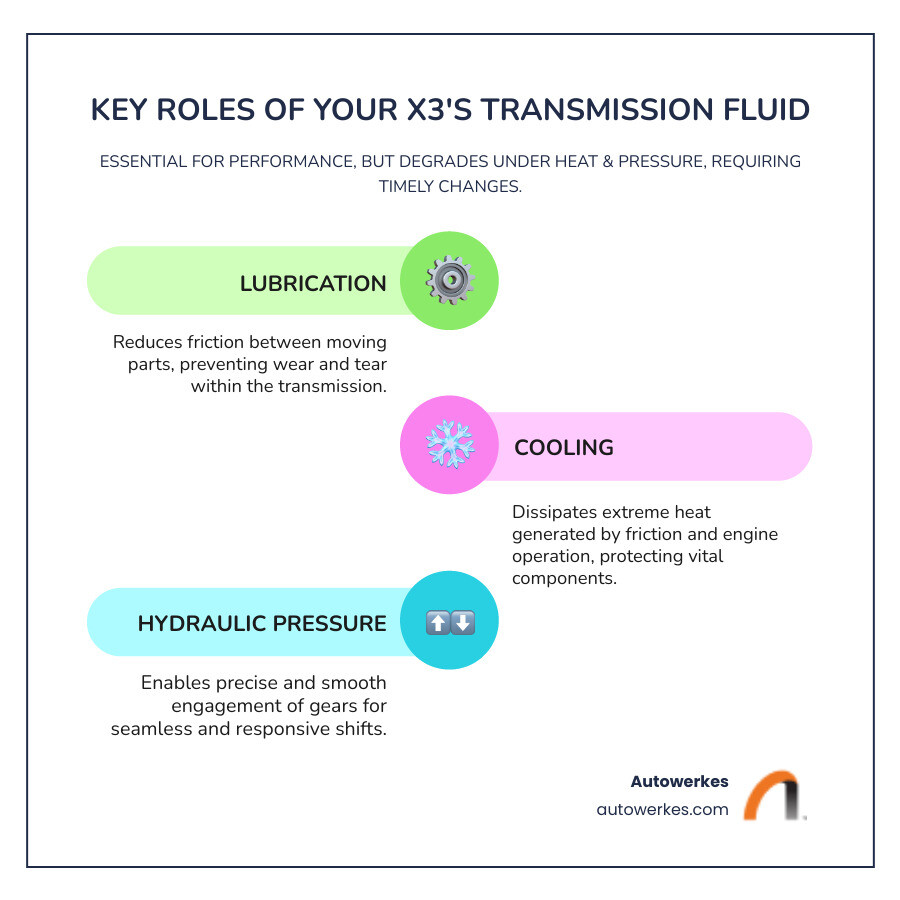
The term "lifetime" fluid from BMW is often misunderstood. It doesn't mean the fluid lasts forever, but rather refers to the expected lifespan of the transmission itself under ideal conditions. This essential fluid lubricates gears, cools components, and provides the hydraulic pressure for smooth shifts.
Over time, extreme heat and pressure cause the fluid to break down and lose its protective qualities. When this happens, your X3's transmission performance suffers, leading to rough shifts and extra strain that can cause costly repairs. A timely bmw x3 transmission fluid change is key to maintaining your vehicle's performance and longevity.
The Complete Guide to Your BMW X3 Transmission Fluid Change
This section covers everything you need to know about this essential service, from recognizing issues to understanding the process and costs.
Symptoms of Bad Fluid & When to Service Your X3
Ignoring your X3's warning signs can turn a simple fluid change into an expensive transmission rebuild. Look out for these red flags:
- Slipping Gears: The engine revs, but the car doesn't accelerate as it should.
- Rough or Delayed Shifts: You feel harsh jerks, clunks, or a noticeable pause when the transmission changes gears.
- Whining or Grinding Noises: These sounds often indicate poor lubrication and metal-on-metal contact inside the transmission.
- Burning Smell: This distinct acrid odor means the fluid is overheated and failing to cool components effectively.
- Delayed Engagement: A hesitation of a second or two when you shift into Drive or Reverse.
While BMW once used the term "lifetime" fluid, real-world experience shows that a bmw x3 transmission fluid change is needed every 60,000 to 90,000 miles. If you frequently drive in stop-and-go traffic or tow, aim for the lower end of that range. For those planning to keep their X3 long-term, this proactive service is one of the smartest investments you can make.
If you suspect a problem, we advise against continued driving, as it can lead to catastrophic failure. At Autowerkes, our diagnostic process includes a visual inspection for leaks, a test drive to assess shift quality, and the use of specialized scan tools to read fault codes and live data. This comprehensive approach ensures we accurately pinpoint the issue.
For more tips on maintaining your vehicle, visit our blog on 5 Common Issues to Watch Out For in BMWs.
Fluid Types, Capacities, and Specifications by Model
Using the wrong transmission fluid can cause as much damage as not changing it at all. Your X3's transmission is engineered for a very specific fluid, and substitutes can lead to poor shifting, increased wear, overheating, and even premature failure.
The exact fluid your BMW X3 needs depends on its model year and the specific transmission it was built with. At Autowerkes, we only use fluids that meet or exceed BMW specifications, never cutting corners with universal or cheaper alternatives.
Here's a general guide to fluid types and capacities across X3 generations:
| BMW X3 Generation | Model Years | Engine | Fluid Capacity (approx.) | Recommended Fluid Type |
|---|---|---|---|---|
| E83 | 2004-2006 | 2.5L/3.0L | 9.5 quarts | BMW-approved ATF meeting LT 71141 specification |
| E83 | 2007-2010 | 3.0L | 8.5 quarts | BMW-approved ATF meeting LT 71141 specification |
| F25 | 2011-2014 | 3.0L/2.0L | 9.0 quarts | BMW-approved ATF meeting Shell M-1375.4 specification |
| F25 | 2015-2017 | 2.0L/3.0L | 9.0 quarts | BMW-approved ATF meeting Shell M-1375.4 specification |
| G01 | 2018-2021 | 2.0L/3.0L | 8.9 quarts | BMW ATF 3+ |
| G01 | 2022-2024 | 2.0L/3.0L | 8.9 quarts | BMW ATF 3+ |
Note: These are general guidelines. Always verify requirements with our technicians for your specific vehicle.
The listed capacities are typical, but the exact amount needed can vary. This is another reason professional service matters—our technicians ensure your transmission is filled to the precise level required. For accurate fluid selection and service, trust the experts at Autowerkes. Learn more about our BMW transmission service info.
Why Trust a Professional for Your BMW X3 Transmission Fluid Change
While some car maintenance is great for DIY enthusiasts, a bmw x3 transmission fluid change is a complex task best left to professionals. Modern X3 models feature a sealed transmission design with no dipstick, making it impossible to check the fluid level easily. This design demands precision.

Performing this service correctly requires:
- A professional lift to ensure the vehicle is perfectly level.
- A fluid transfer pump to fill the transmission through its side port.
- A specialized diagnostic scan tool to monitor the fluid temperature in real-time.
- Calibrated torque wrenches to prevent leaks or damage.
The most critical part of the process is achieving the correct fluid level, which must be done within a narrow temperature window (typically 30°C-50°C). Fluid expands when hot, so filling it at the wrong temperature will result in an incorrect level, leading to foaming, pressure loss, or inadequate lubrication. This delicate "oil balancing" procedure is nearly impossible to perform accurately without the right tools.
At Autowerkes, our certified technicians have extensive experience with all generations of BMW transmissions. We know the common pitfalls and ensure the job is done correctly, accurately, and safely, giving you peace of mind and preserving your X3's performance.
Understanding the BMW X3 Transmission Fluid Change Process
It's important to understand the difference between a fluid change and a flush. A transmission fluid change (or "drain and fill") is the BMW-specified method. It involves draining the old fluid, removing the transmission pan, replacing the integrated filter, and refilling with fresh fluid. This allows our technicians to inspect the pan for metal shavings, which can signal early signs of internal wear.
A transmission flush, which uses a machine to force out old fluid, is generally not recommended by BMW. The high pressure can dislodge debris and push it into critical passages, causing blockages and damage, especially in older transmissions. For your X3, we stick with the proven drain-and-fill method.
The bmw x3 transmission fluid change is a meticulous process:
- Preparation: The vehicle is lifted and leveled, and the fluid is warmed slightly to help it drain.
- Draining & Inspection: The old fluid is drained. We then remove the transmission pan (which contains the filter) and inspect its magnets for metallic debris.
- Pan & Filter Replacement: A new pan with an integrated filter and a fresh gasket is installed and torqued to BMW's exact specifications.
- Refilling & Balancing: New, BMW-approved fluid is pumped into the transmission. With the engine running, we use a scan tool to monitor the fluid temperature while cycling through the gears. This "oil balancing" ensures the fluid circulates completely and allows us to set the final level with absolute precision.
- Final Checks: The fill plug is torqued, we inspect for any leaks, and the vehicle is test-driven to confirm smooth shifting.
Given the complexity and specialized tools required, professional service is highly recommended. While some DIY guides exist, like this Enthusiast DIY guide for reference, entrusting your vehicle to experts ensures the job is done right, protecting your investment.
Trust the Experts with Your BMW's Transmission
Your BMW X3 is a finely tuned machine, and its transmission is at the heart of its performance. As we've covered, that "lifetime" fluid isn't forever, and a proper bmw x3 transmission fluid change is vital to prevent costly damage and maintain the smooth, responsive shifts you love.

At Autowerkes, our certified technicians are experts in European auto repair, serving drivers across Huntington Beach, Newport Beach, Los Angeles, San Diego, and surrounding communities. We have the specialized tools, diagnostic equipment, and deep-seated knowledge to service your X3's transmission to BMW's exact standards, using only approved fluids and quality parts.
Investing in professional maintenance is a smart way to extend the life of your luxury vehicle and save money on future repairs. Don't wait for problems to arise.
Is your BMW ready for the expert care it deserves? Book your BMW Auto Repair service with Autowerkes today, and let us help keep your X3 running in peak condition.
.png)