E83 Transmission Fluid Swap: Don't Let BMW's 'Lifetime' Fool You!

.svg)


Why Your E83's 'Lifetime' Fluid Isn't Forever
A BMW e83 transmission fluid change is a crucial maintenance task, despite BMW's claims that you'll never need to do it. Here's what you need to know:
Quick Answer: BMW E83 Transmission Fluid Change Essentials
- Recommended Interval: Every 50-60k miles (ZF recommendation) vs. BMW's 100k miles or "lifetime"
- Fluid Type: DEXRON VI automatic transmission fluid
- Fluid Capacity: Approx. 9 quarts total (4-5 quarts for drain and refill)
- Filter: Yes, the E83 has one integrated into the pan
- Key Temperature: 30-500C (86-1220F) for accurate level checking
- Critical First Step: Always loosen the fill plug before draining
BMW defines a car's "lifetime" as about 100,000 miles. If you plan to keep your E83 X3 longer, that "lifetime" fluid can lead to expensive transmission repairs. The 2007+ E83 uses a GM-derived 6L50 transmission. While BMW suggests a 100,000-mile interval, the transmission manufacturer, ZF, recommends a fluid and filter service every 50-60,000 miles. Waiting longer increases the risk of internal wear.
The benefits of regular transmission fluid changes include:
- Smoother, faster shifts
- Extended transmission life
- Prevention of expensive rebuilds
- Better heat management
- Cleaner internal components
The job requires precision with fluid temperatures, torque specs, and a perfectly level vehicle. A standard drain and refill replaces about 4.5 quarts of the 9-quart system, making regular changes even more important for maintaining fluid quality.

A DIY Guide to the BMW E83 Transmission Fluid Change
Ready to tackle your BMW E83 transmission fluid change? With the right preparation and a methodical approach, you can handle this in your own garage and give your X3 the care it deserves.
Essential Tools and Supplies for the Job
Proper preparation is key. Before starting, gather all necessary tools and supplies to ensure a smooth process.
- Fluid Type: The E83's GM 6L50 transmission requires Dexron VI automatic transmission fluid. Using the correct fluid is critical to avoid shifting problems and damage.
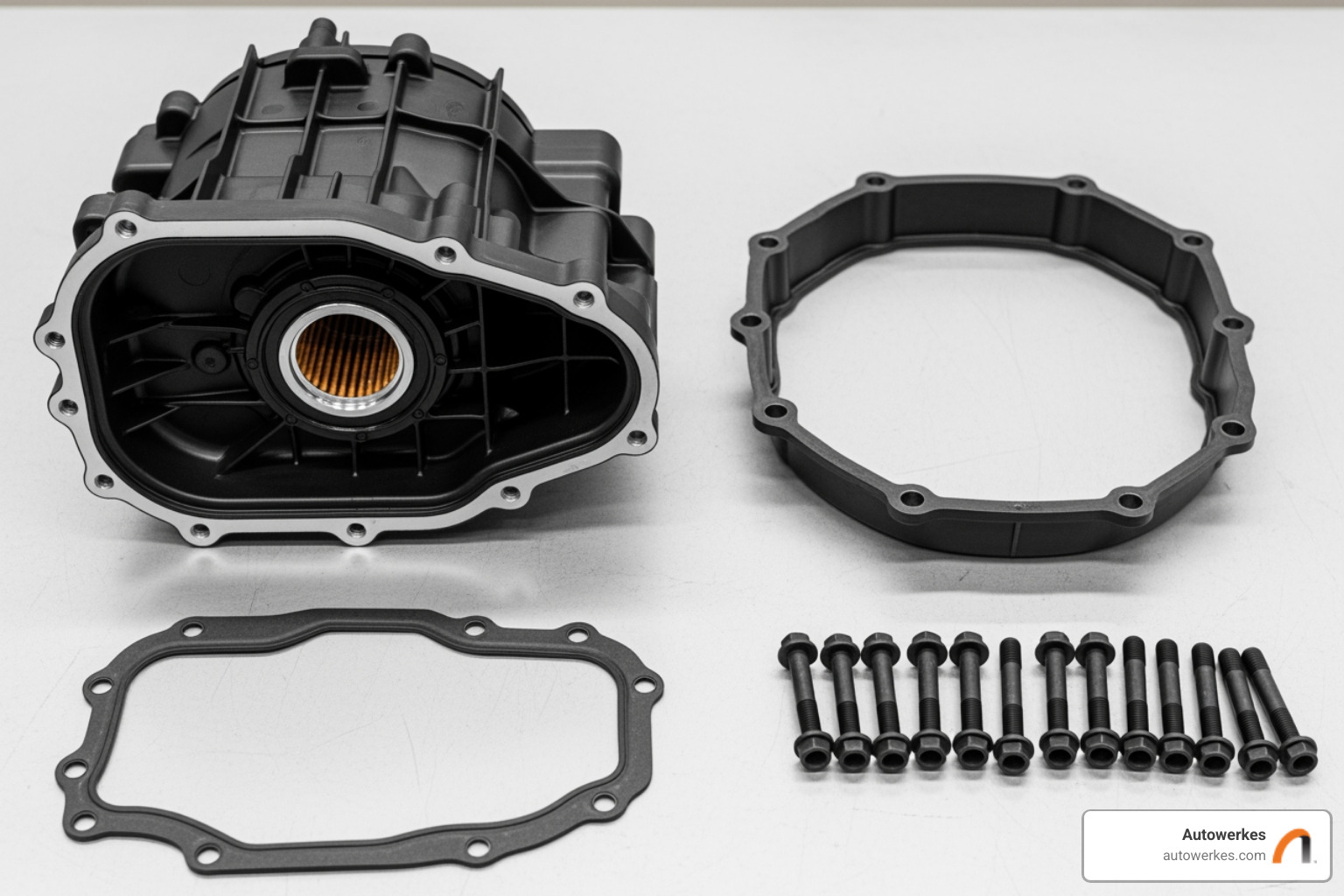
- Filter: Yes, the E83 has a transmission filter. It's integrated into the pan, so you replace the entire pan assembly, which includes a new pan, gasket, and filter. This should be done with every fluid change (every 50-60,000 miles).
- Fluid Capacity: The total system capacity is about 9 quarts, but a drain and refill only replaces 4-4.5 quarts. Have 6-7 quarts of Dexron VI on hand to be safe.
- Tools & Supplies: You will need a transmission service kit (pan, filter, gasket, bolts), a torque wrench, a fluid transfer pump, an 8mm/10mm hex socket set, a T40 Torx socket, jack stands, a large drain pan, brake cleaner, a gasket scraper, gloves, and shop towels.
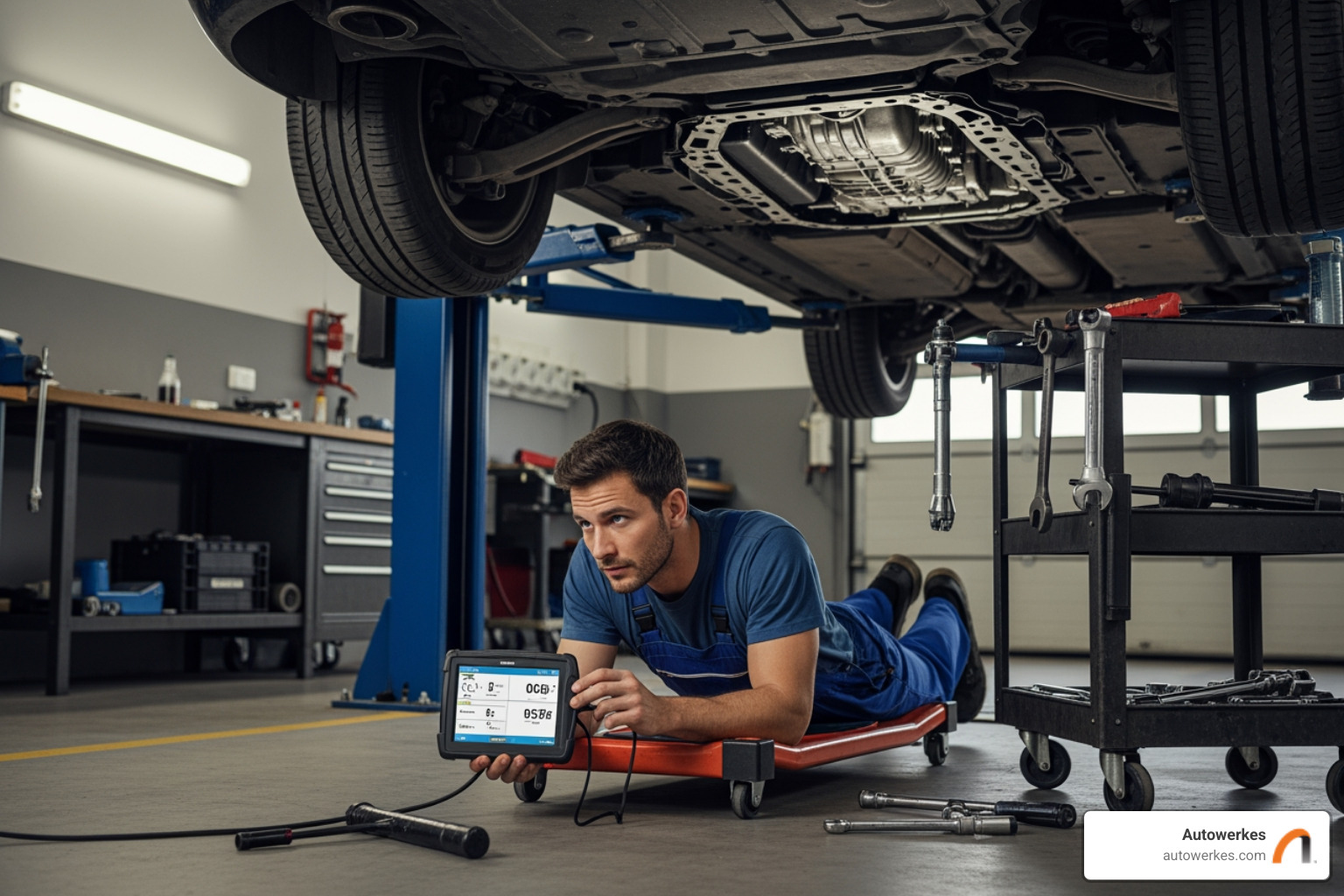
- Scan Tool: A diagnostic scan tool is highly recommended for accurate transmission fluid temperature readings. An infrared thermometer is a less reliable alternative due to the plastic pan.
The Step-by-Step Draining and Refilling Procedure
Always work on a cool engine and transmission.
- Preparation: Park on a perfectly level surface and safely raise the vehicle on jack stands. Remove any underbody panels blocking the transmission pan.
- Loosen Fill Plug: This is the most critical first step. Before draining any fluid, locate and loosen the fill plug on the side of the transmission. If it's seized and you've already drained the fluid, your car is immobile.
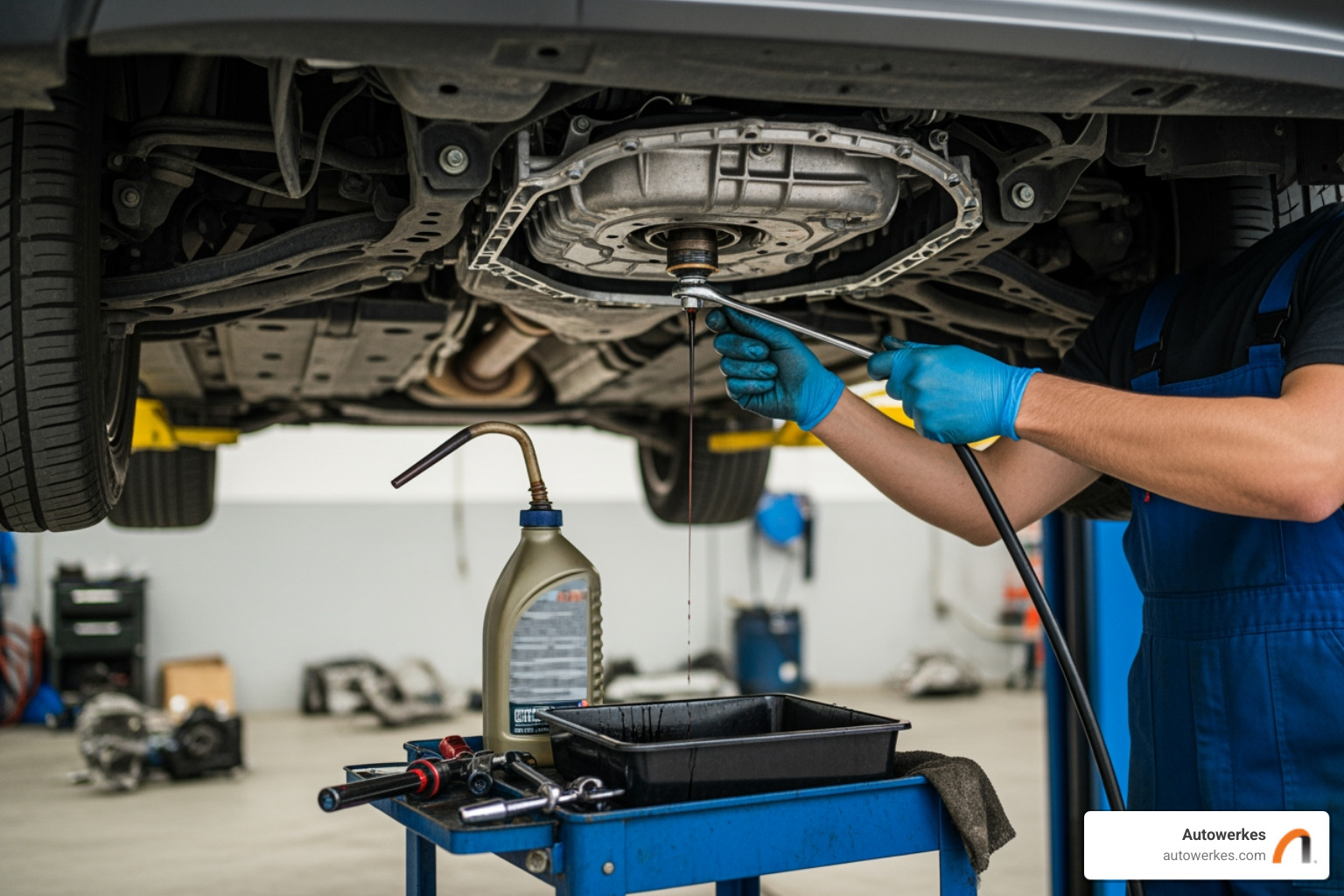
- Drain Fluid & Remove Pan: Position a drain pan and remove the drain plug. Once the flow slows, remove the pan bolts, keeping the drain pan underneath to catch remaining fluid. Inspect the old fluid and magnets for excessive metal debris (fine sludge is normal).
- Clean and Install: Thoroughly clean the transmission's mating surface with a gasket scraper and brake cleaner. Position the new pan/filter assembly and hand-thread the new bolts.
- Torque Bolts: Using a torque wrench, tighten the pan bolts to 10 Nm in a criss-cross pattern to ensure an even seal. For a visual guide on proper technique, the ZF transmission service best practices guide is an excellent resource, though it covers a different transmission.
- Initial Fill: Use a fluid transfer pump to add new Dexron VI through the fill port until it begins to trickle out. Loosely reinstall the fill plug.
How to Correctly Check the Fluid Level
This is the most critical part of the job. An accurate fluid level is essential for proper transmission function.
- Engine Running: The fluid level must be checked with the engine running. Checking it with the engine off will result in a severely underfilled transmission.
- Temperature is Key (30-50°C): The fluid must be between 30°C and 50°C (86°F to 122°F). Use a diagnostic scan tool to monitor the temperature. Start the engine and let it idle to warm up. Patience is crucial.
- Cycle Gears: With the engine running and your foot on the brake, shift through all gears (P, R, N, D, M), pausing for a few seconds in each to circulate the fluid. Return to Park.
- Final Fill: With the engine running and the fluid in the correct temperature range, remove the fill plug. Add fluid until it trickles out. This indicates the correct level.
- Install Plug: Immediately reinstall the fill plug and torque it to 35 Nm.
Reinstall underbody panels, lower the car, and perform a test drive. Check for leaks the next day. If you're uncertain, our team at Autowerkes is here to help. More about our expert services.
Common Mistakes and Other Drivetrain Fluids
Avoid these common pitfalls during your BMW E83 transmission fluid change.
- Not loosening the fill plug first: A project-ending mistake. Always check it before draining.
- Car not level: This will cause an incorrect fluid level, leading to over or underfilling.
- Incorrect fluid temperature: The 30-50°C range is not a suggestion; it's mandatory for an accurate reading.
- Over-torquing bolts: This can warp the pan or strip threads. Use a torque wrench and stick to the specs (10 Nm for pan bolts, 35 Nm for the fill plug).
- Forgetting adaptations reset: While not needed for the E83's transmission, a transfer case fluid change requires a VTG adaptations reset with a scan tool to avoid issues.
While you're under the car, it's wise to service the transfer case and differentials. BMW's "lifetime" fluid claim applies here too, and it's equally misleading.
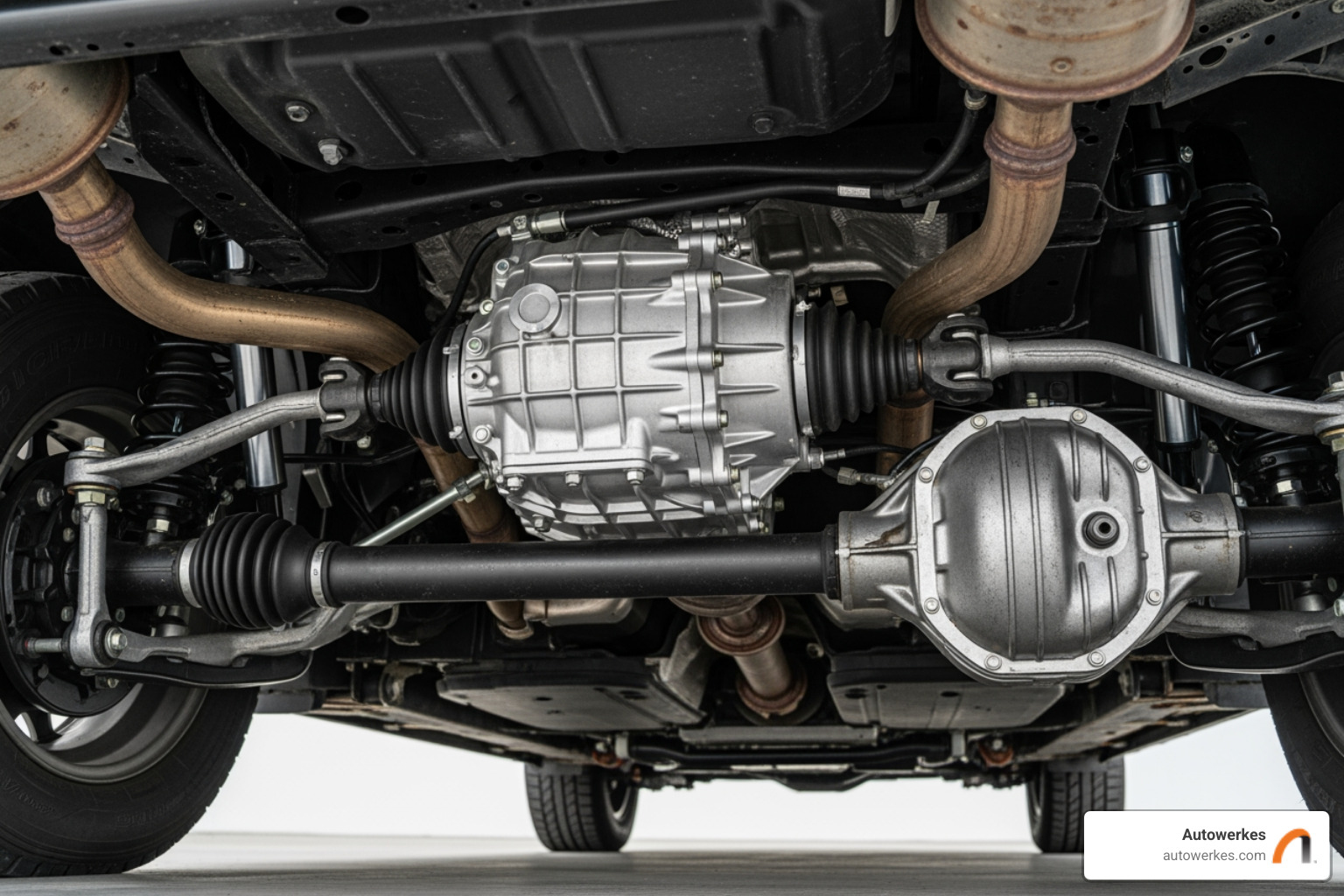
- Transfer Case Fluid: Critical for xDrive, this fluid should be changed every 80-100,000 miles. Use only the specific BMW transfer case fluid (TF 0870) and reset VTG adaptations afterward.
- Differential Fluids: Experts recommend changing front and rear differential fluids every 40,000 miles. You'll need about 3 quarts of 75w90 fluid total.
Servicing these components provides comprehensive protection for your X3. Neglecting them is one of the 5 Common Issues to Watch Out For in BMWs.
Protect Your Investment: When to Trust the Experts
While a DIY BMW E83 transmission fluid change can be satisfying, it's a precision job where small mistakes can lead to big problems. The service requires maintaining exact fluid temperatures, a perfectly level vehicle, and using diagnostic tools for real-time data—all while torquing bolts to spec. It's a complex task that directly impacts a costly component.
Even experienced DIYers can face seized plugs, incorrect temperatures, or a lack of proper tools, turning the project into a major frustration. That's where the value of professional service shines. At Autowerkes, we've performed countless transmission services on BMW E83 X3s. Our technicians have the specialized diagnostic equipment, a proper lift, and the experience to spot potential issues and get the job done right the first time.
We know the correct torque specs, fluid types, and procedures to ensure your BMW is protected. We serve BMW owners throughout Huntington Beach, Newport Beach, Fountain Valley, Palos Verdes, Manhattan Beach, Los Angeles, Irvine, Mission Viejo, Laguna Beach, and San Diego. Our goal is to provide peace of mind that your vehicle receives the expert care it deserves.
Whether you DIY or use our services, taking action is what matters. Don't let the "lifetime" fluid myth compromise your X3's longevity. Proper maintenance will ensure it serves you well beyond 100,000 miles.
Ready to protect your investment with expert care? Schedule your BMW Auto Repair with us today. Your BMW deserves technicians who understand its engineering and have the expertise to keep it running smoothly.

